
Supporting the health sector in Papua New Guinea
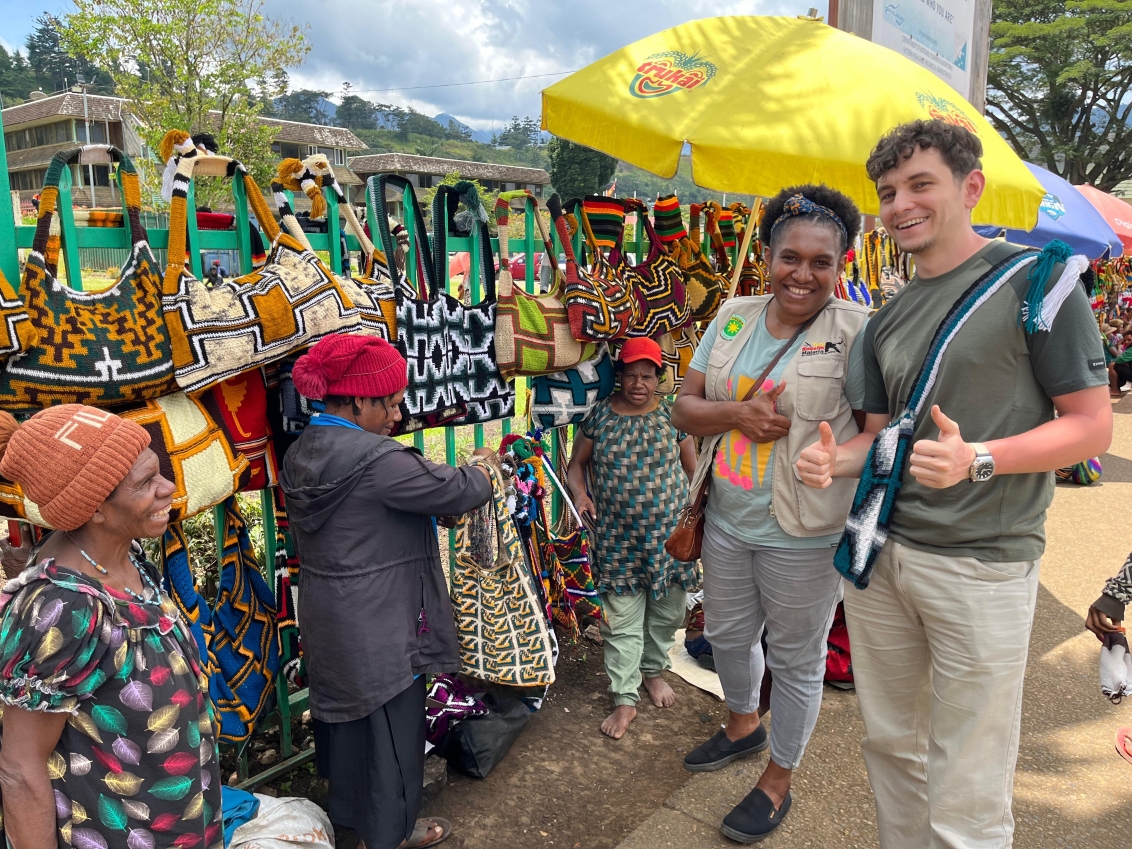
Swiss TPH has a long history of collaboration with partners in Papua New Guinea (PNG), a country in the South Pacific that faces major health challenges including high rates of infectious diseases such as malaria, tuberculosis, HIV/AIDS, and outbreaks of vaccine-preventable illnesses like polio. The country continues to struggle with poor access to healthcare particularly in the many remote communities, there is a shortage of trained health workers, and climate-related disasters, weak infrastructure and difficult logistics in a challenging terrain place additional strain on the health system.
In partnership with the Papua New Guinea Institute of Medical Research (PNGIMR), Swiss TPH has been supporting the National Malaria Control Program (NMCP) at the National Department of Health by generating evidence to inform the implementation of effective malaria control measures.
We jointly conduct large-scale national surveys, operational research and epidemiological studies to identify and validate control measures and strategies that could help accelerate PNG's progress towards malaria elimination.
An emerging partnership with Divine World University aims to further strengthen capacity development and education for the health sector in PNG.
Ongoing projects

Reactive case detection and treatment of malaria
We evaluate the feasibility of Reactive Case Detection and Treatment (RACDT) as a malaria surveillance and response strategy in the Highlands of PNG, where malaria transmission is low and infections are expected to cluster geographically. By using clinical malaria cases identified through routine health services as triggers for targeted household testing and treatment, the study aims to provide operational evidence to support the National Malaria Control Programme’s transition toward elimination. The project will measure and characterize malaria infections detected within index households to assess the effectiveness and coverage of RACDT in routine practice.
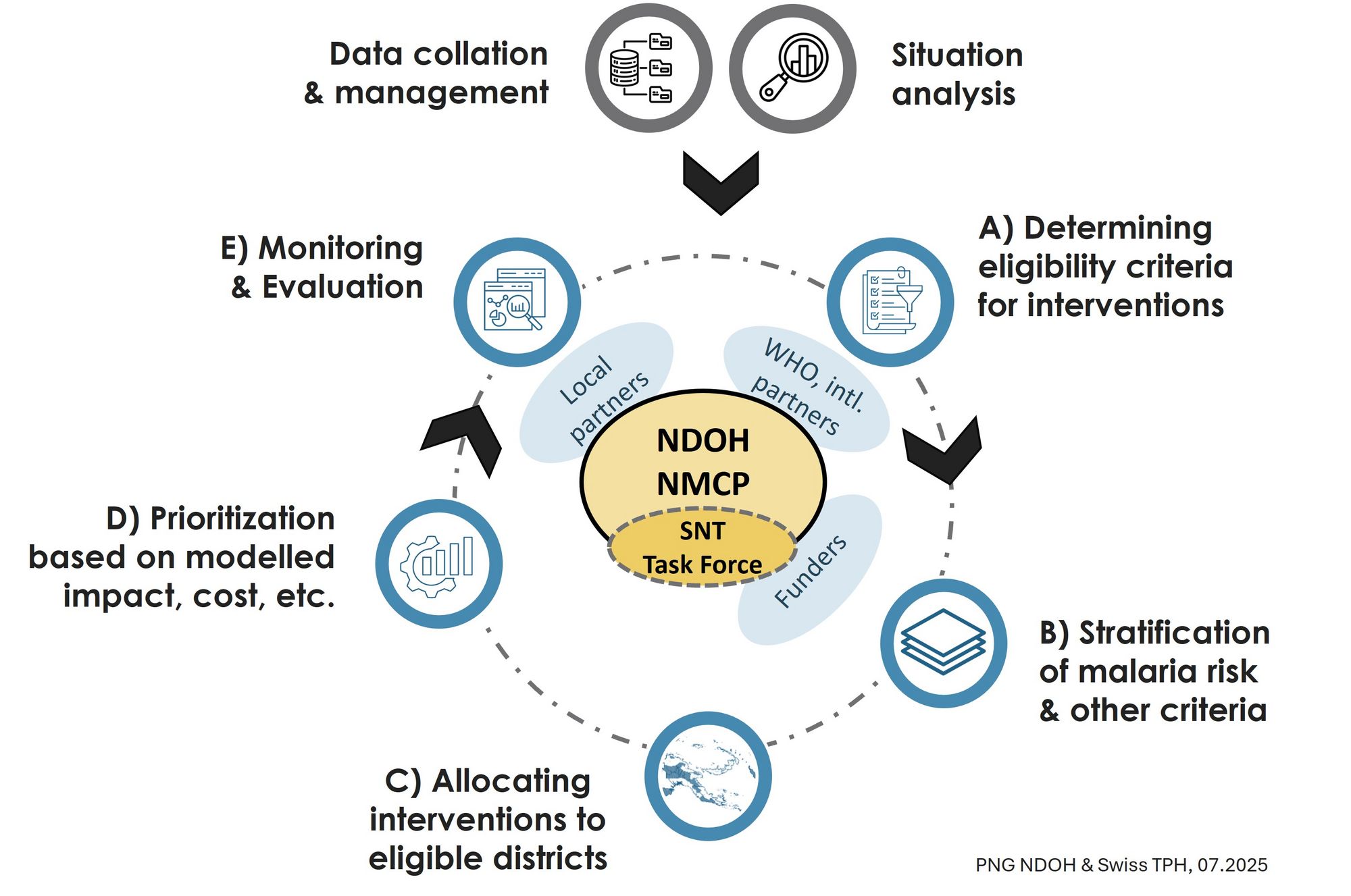
Sub-national stratification of malaria interventions
In close collaboration with the Analytics and Intervention Modelling group, CHAI, and the National Department of Health, we support the development of PNG’s new National Strategic Plan for Malaria 2026–2030. We provide guidance to establish a process for sub-national tailoring of malaria interventions in PNG, including analytics focused on stratifying malaria risk, defining district-level intervention eligibility, and modelling to inform the prioritisation of interventions for more effective resource allocation. The project also responds to recommendations to strengthen malaria risk stratification and improve targeting of malaria interventions across the country. → Read more
Highlights of completed projects
Malaria stratification: looking beyond epidemiological indicators
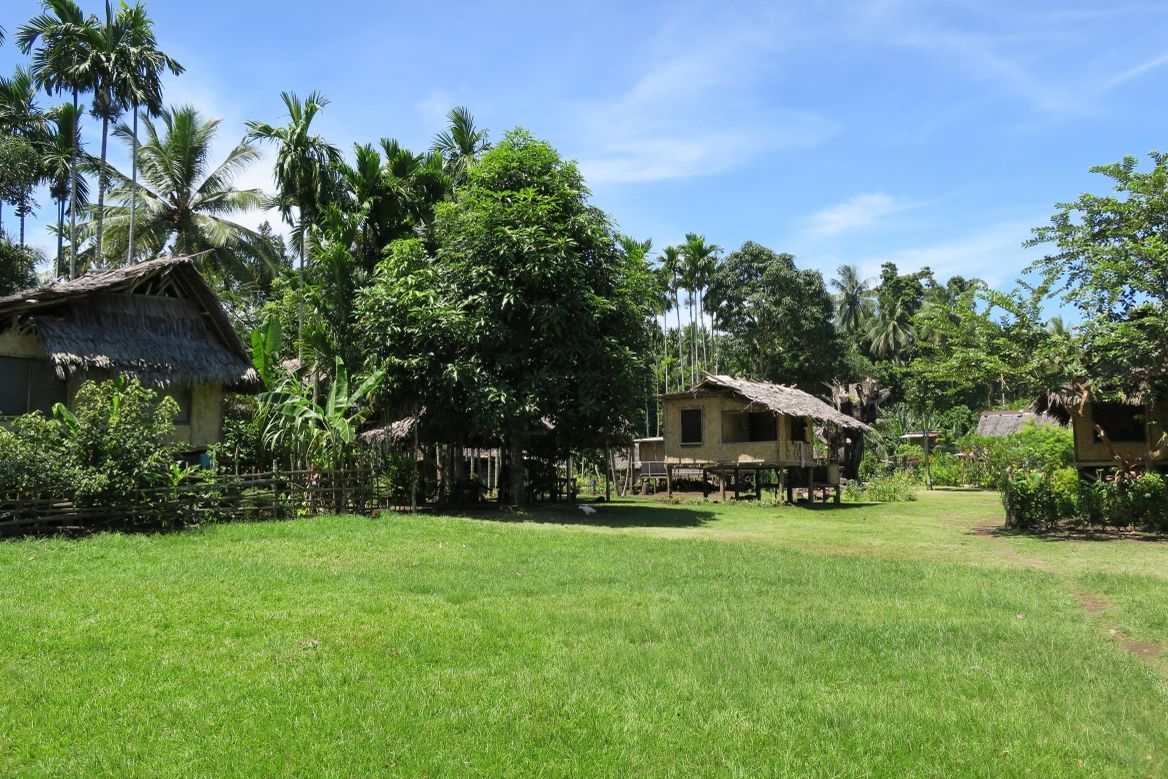
This project develops a multi-dimensional approach to malaria stratification that goes beyond malaria risk alone by incorporating social, environmental, health system, and cultural factors. Using PNG as a model setting, researchers and stakeholders will co-develop tailored strategies for sub-national malaria control and elimination. The findings will support more effective, locally adapted interventions in PNG and other malaria-endemic countries, contributing to progress toward Universal Health Coverage and SDG3. → Read more
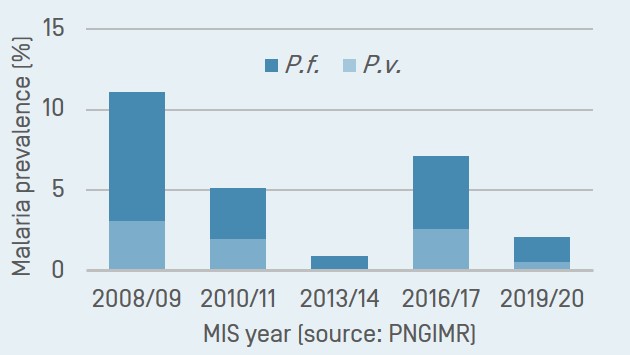
Malaria indicator surveys documenting changes in malaria prevalence
Together with the PNG Institute of Medical Research, we conducted national Malaria Indicator Surveys (MIS) documenting significant changes in the prevalence of malaria infections and in the coverage of vector control and case management as interventions were scaled up across the country. The first MIS was conducted in 2008 and findings have informed the effective implementation of activities by the NMCP. MIS reports are available on → ZENODO.
School malaria survey in the Highlands of Papua New Guinea
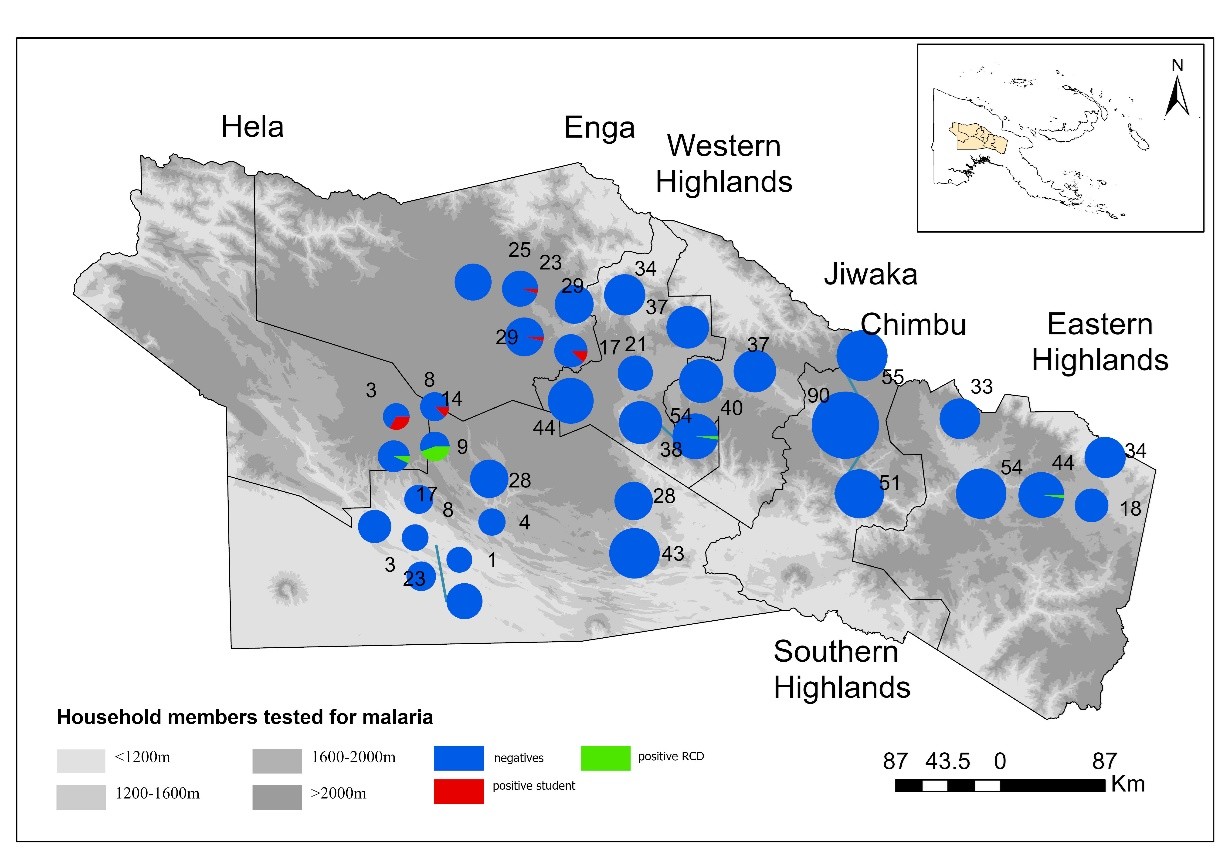
In the Highlands of PNG, the climate is generally unsuitable for stable malaria transmission, providing an opportunity for complete interruption of local transmission and sub-national elimination. We conducted a school malaria survey combined with reactive case detection and found only 13 malaria infections among over 6600 participants. A history of recent travel to coastal provinces was a strong predictor of infection. The findings indicate a conducive setting for pushing towards local malaria elimination, if operational capacities allow. → Publication in the Malaria Journal
Understanding heterogeneities in malaria in Papua New Guinea
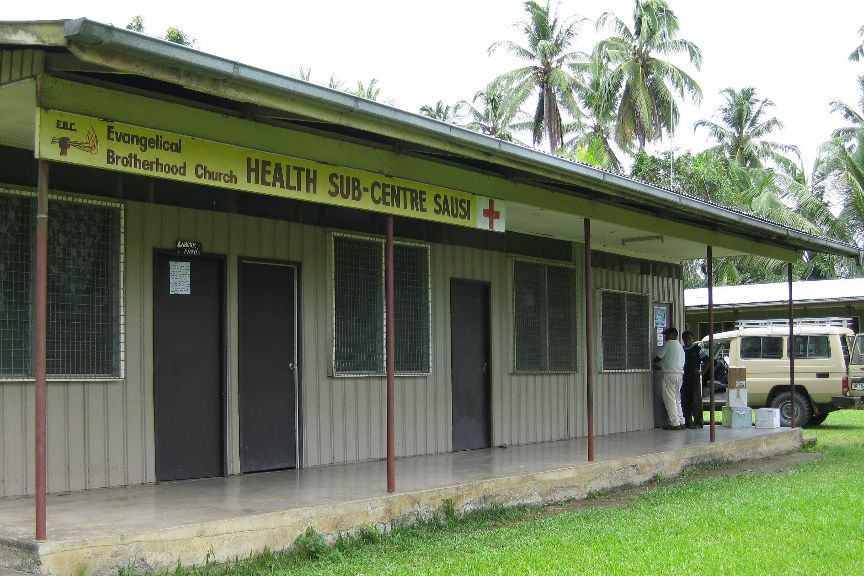
Data from sentinel surveillance sites provide a detailed picture of trends in clinical malaria cases over time complementing national routine statistics. We used sentinel site malaria data to evaluate species-specific morbidity trends and estimate the relative impact of malaria control interventions. We found that repeated mosquito net distributions, but not the introduction of more effective treatment, reduced the incidence of clinical malaria. Human and mosquito behavior may be important drivers of ongoing malaria transmission. → Read more
Partners and collaborators
Swiss TPH is an institutional member of the Buttressing Coalition, a support network for the Papua New Guinea Institute of Medical Research.