
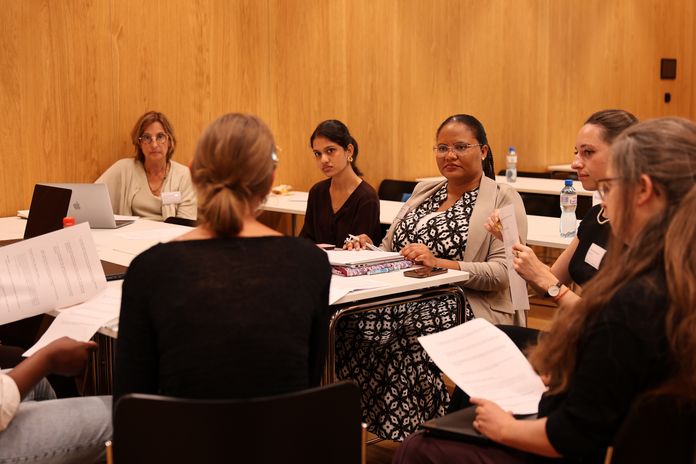
How can education equip the next generation of leaders to address increasingly complex challenges and create lasting change? At yesterday's symposium “From Knowledge to Impact: Transformational Learning in Global Health”, more than 130 global health educators, students and researchers convened at Swiss TPH in Allschwil. The event explored the future of teaching and learning while celebrating 30 years of the tropEd network.
Education is central to translating knowledge into real-world impact. New competencies, innovative formats and relevant content are needed to prepare the next generation of global health professionals and leaders - and the pace at which the field's challenges are changing has made that task more urgent.
Education and the field of practice
The first keynote of the day started challenging how programmes are conventionally built: around content to be covered and delivered. Global health education needs to "move beyond content delivery toward measurable competence, community, connection and collaborative practice", argued Georgina Yeboah, Executive Director of AFREhealth - a shift not only in what is taught, but in how learning is assessed and who it connects people to.
Rethinking learning in the age of AI
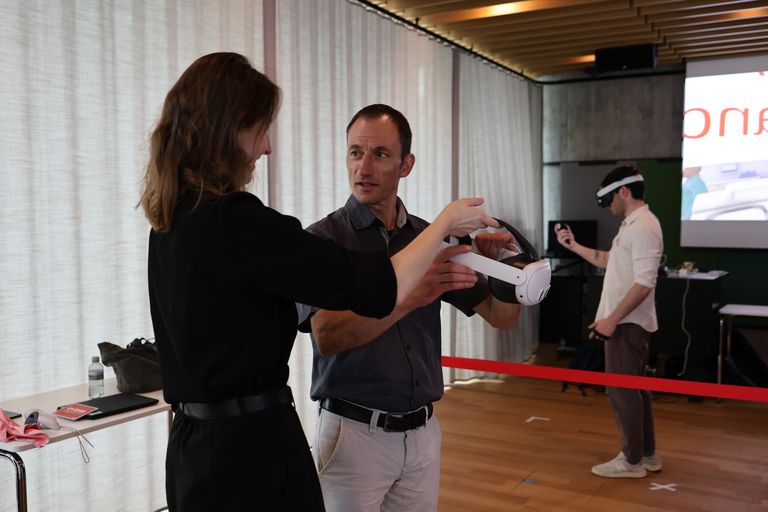
Artificial intelligence and immersive simulations are changing how students learn and how educators teach. With students already using AI, institutions face pressing questions about how to adapt their curricula, teaching and assessment. Ulf-Daniel Ehlers called on institutions to "shift education from a paradigm of knowledge transfer to a paradigm of judgement". His message highlighted the importance of developing graduates’ critical judgement, including their ability to understand how new technologies work and assess their use. Parallel sessions took the question into practice, from designing courses with AI to testing whether immersive reality simulations in global health settings are actually building skills for global health settings. Participants also discussed questions of access and equity as these technologies become more widely used.
Networks are what carry knowledge across borders
The symposium also marked 30 years of tropEd, a global network of institutions offering postgraduate education in international and global health. Over three decades, the content of teaching has been revised many times; what has endured are the relationships between institutions and the shared standards built through them. Looking ahead, "the goal is not short-term collaboration but long-term partnership, beyond project-based thinking," said Marcel Tanner, Director emeritus of Swiss TPH. His words underlined the importance of sustained cooperation between institutions in supporting global health education.
Looking ahead
A recurring message throughout the day was the need to connect education with the realities of health systems and communities. That means programmes built around competence and collaborative practice, teaching that forms judgement as new technologies reshape the education system, and investment in long-term partnerships. In the closing words of Markus Eigenmann, Governing Council Member of the Canton of Basel-Landschaft, "knowledge should be usable, and that requires education, exchange, and networking".