Global diversity of M. Tuberculosis
Genetic Differences
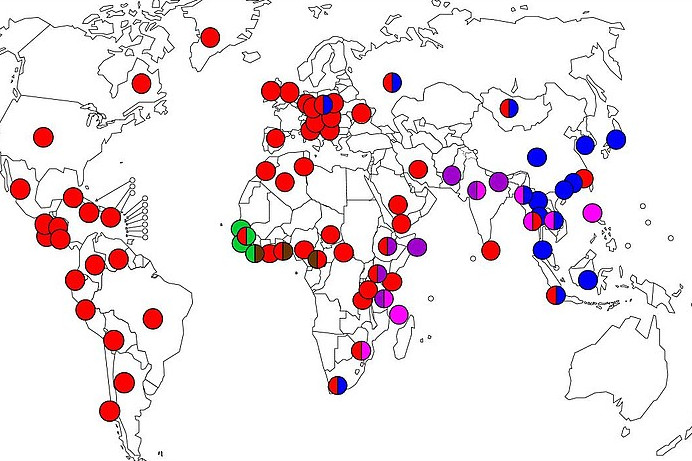
We have previously shown that Mtb consists of six phylogenetically distinct lineages which are associated with different regions of the world (Figure 1). Currently, we are using large-scale comparative DNA sequencing to study the nature of the genetic differences between these lineages and the evolutionary forces which shape this diversity.Global Phylogeny
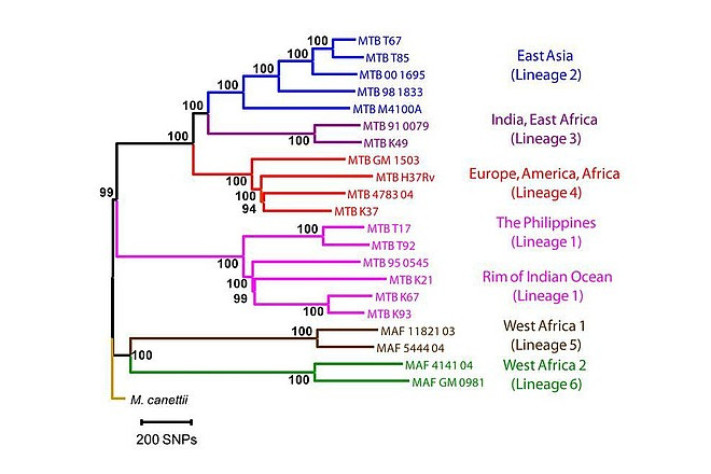
Recently, we published the first whole-genome based global phylogeny of Mtb (Figure 2). This phylogeny demonstrates that Mtb is more genetically diverse than previously believed, and supports the notion that human TB originated in Africa. Our ongoing work on the global strain diversity of Mtb is now focusing on geographic areas and human populations where no or only limited data are available. A particular emphasis will be on sub-Saharan Africa and Asia where we hope to discover novel Mtb lineages.
Highly Conserved T Cell Antigens
Population genomic analyses of our whole genome data also revealed that, in contrast to most other human pathogens which evade host immune responses by accumulating antigenic variation, T cell antigens in Mtb are highly conserved. These findings have important implications for the development of new TB diagnostics and vaccines. Following on this observation, we are now screening for variable regions of the Mtb genome which might represent as yet unrecognised human antigens.
Novel Genotyping Approaches
We have used DNA sequencing to evaluate the phylogenetic performance of the current genotyping tools used for Mtb (i.e. spoligotyping and MIRU-VNTR). We found that while these tools are valuable for standard molecular epidemiological applications, they are inadequate for phylogenetic and population genetic analyses of Mtb. Hence we are now developing novel single nucleotide polymorphism based genotyping approaches for Mtb, which we will implement in collaboration with partners in areas where TB is highly endemic.