
Health and Development Economics
Why do some families seek preventive care while others do not? Why do identical health programmes succeed in one community but not in another? Health outcomes are shaped not only by medical interventions, but by how individuals respond to incentives, how systems perform, and how policies are implemented.
Our research focuses on how individuals and households interact with health systems, and how economic incentives, constraints, and behavioural factors influence health outcomes. We apply economic and interdisciplinary approaches to understand decision-making in health, improve health system performance, and quantify the long-term consequences of health interventions. Our research portfolio spans from understanding individual health decisions to evaluating health system performance and assessing intervention delivery strategies across diverse global settings. By linking micro-level behaviour with system-level structures, we generate evidence for designing health policies that are effective, equitable, and sustainable in diverse global settings.
Our research focus
Understanding health decisions in the real world
Financial pressures, social expectations and incomplete information all influence whether families seek care, follow treatment, or adopt preventive behaviours. We study how people make health decisions in real-world situations, identifying the barriers that prevent effective interventions from reaching those who need them most.
Measuring health systems from the patient's perspective
Do people trust their health system? Can they access quality care? Are vulnerable populations being left behind? We evaluate health system performance through the eyes of those it is meant to serve, measuring trust, service quality, care pathways, and equity, with a particular focus on the most vulnerable.
Costs and incentives
Healthcare is expensive and governments around the world are keen on reducing costs. We are interested in how systems need to be structured to deliver high quality care without increasing costs – what are the optimal incentives? How much should patients pay? Should they be paid or at least be encouraged to engage in preventive care? Should doctors be rated online? Should payments be conditional on performance at least partially?
Tracking the long-term ripple effects of health interventions
A deworming programme for children today could affect their future earnings. A malaria treatment strategy could influence a generation's educational outcomes. We assess these long-term health and economic consequences and analyse cost-effectiveness to help policymakers decide how to allocate limited resources most effectively.

Selected projects
Digital support systems for early childhood development
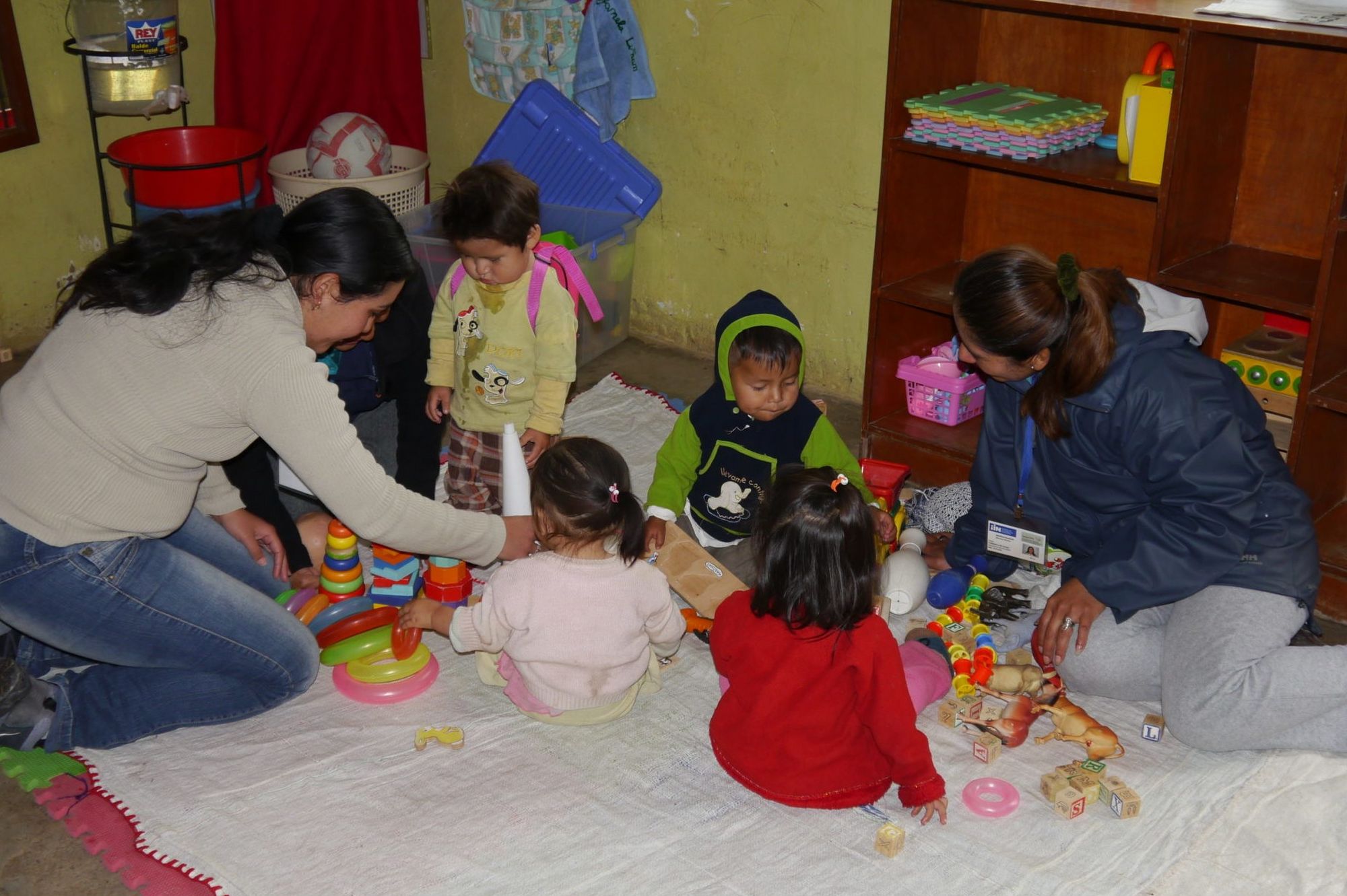
Most brain development occurs before the age of three, yet many parents, particularly in resource-limited settings, lack access to guidance on supporting their child's growth. We evaluated an AI-powered mobile app designed to address this gap, working with 2,400 families in Peru. Our research assessed whether digital tools could effectively complement traditional home-visiting programmes and improve early childhood outcomes where resources are limited. Read more

People’s Voice Survey – measuring health system performance from the ground up
What do people think about their healthcare system? In Latvia, the Netherlands, Scotland, and Switzerland, we are asking them directly. This population-based survey measures the quality, trust, and equity of health systems from the perspective of those who use them – or cannot access them. We pay special attention to voices often excluded: adolescents, migrants, and gender and sexual minorities. Their experiences reveal where systems are failing and what needs to change. Read more

CHILD malaria trial – the decades-long impact of childhood health
Treating malaria in children is about more than just addressing an infection; it could change the trajectory of their lives. This randomised trial in Tanzania has been following children for years to assess the long-term health, cognitive and economic effects of different malaria treatment strategies. Could detecting and treating even low-level infections improve school performance? Or future earnings? We are finding out, and the implications could transform malaria control policy. Read more

Exclusive breastfeeding: global patterns and intervention effectiveness
WHO recommends six months of exclusive breastfeeding, yet this relies on 20-year-old evidence, and true global compliance rates remain unknown. This research re-examines optimal breastfeeding duration through multi-country birth cohort data, creates updated national and global estimates, and tests whether social transfer programs – addressing mothers' economic constraints—can increase exclusive breastfeeding rates in Brazil and Lao PDR. Read more
 Emma Clarke-Deelder
 Anna Duchenko
 Günther Fink
 Lena Jäggi
 Najmeh Karimian-Marnani
 Stephanie Khoury
 Walter Manyiri
 Firew Tiyare
 Jordyn Wallenborn