
Die SAPALDIA Kohorte - 30 Jahre Forschung für eine bessere Gesundheit
Vom Exposom zum Phänom
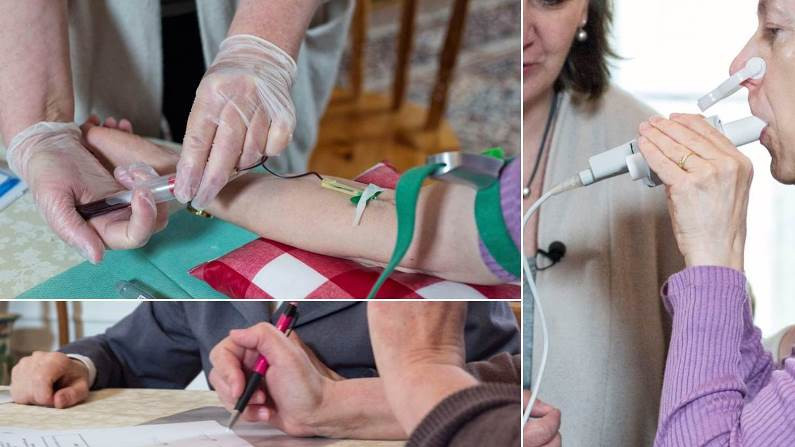
SAPALDIA ist eine Schweizer Langzeitstudie zur Gesundheit in der erwachsenen Bevölkerung. Das Ziel ist es, die gesundheitlichen Auswirkungen von Umwelt- und Lebensstilfaktoren zu untersuchen.
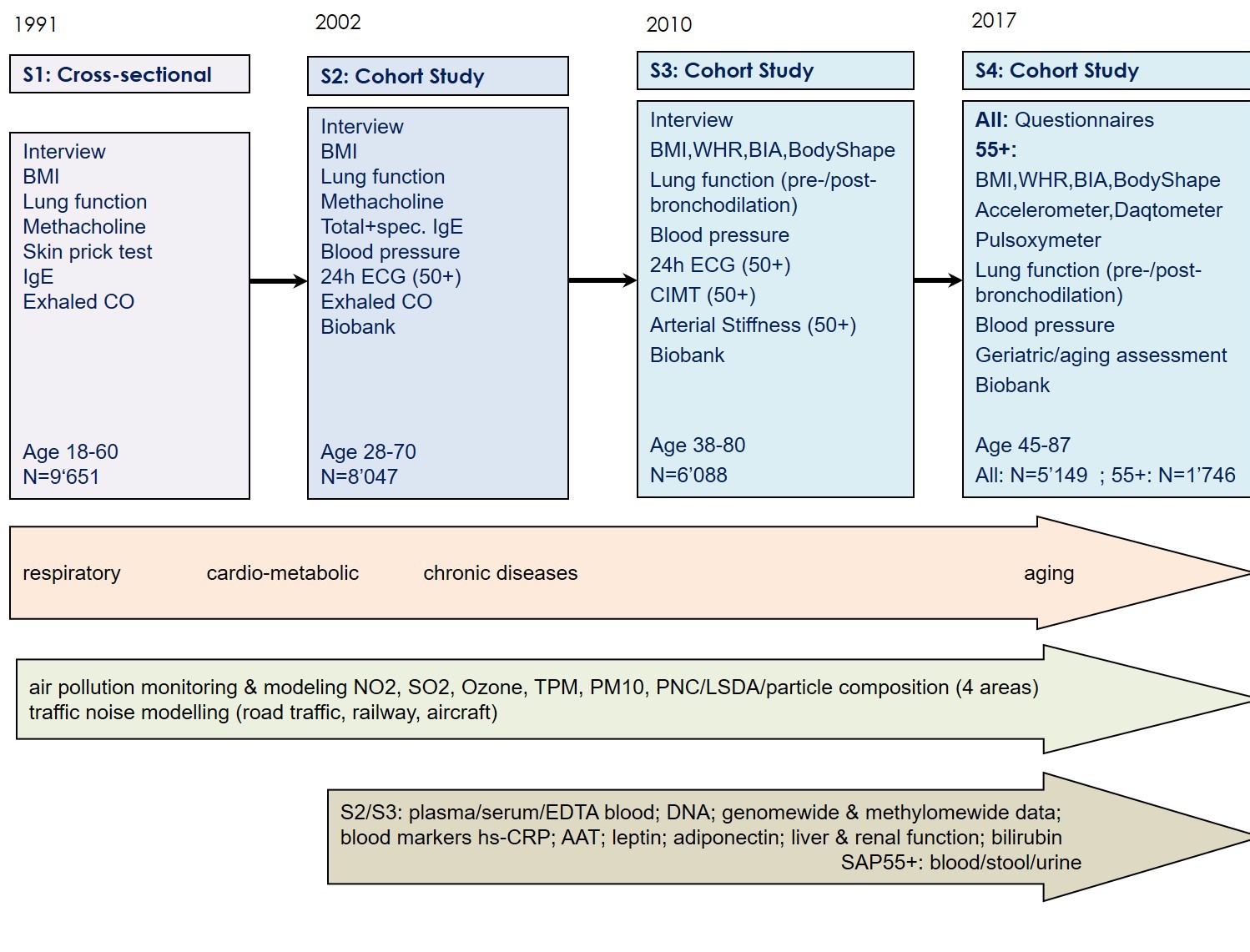
Seit 1991 werden bei jeder SAPALDIA Runde Daten anhand von Fragebögen, Gesundheitsuntersuchungen und mit mobilen Messgeräten gesammelt. Diese Daten über die Umwelt, den Lebensstil und die Gesundheit werden bei den gleichen Studienteilnehmenden seit nun 30 Jahren erhoben.
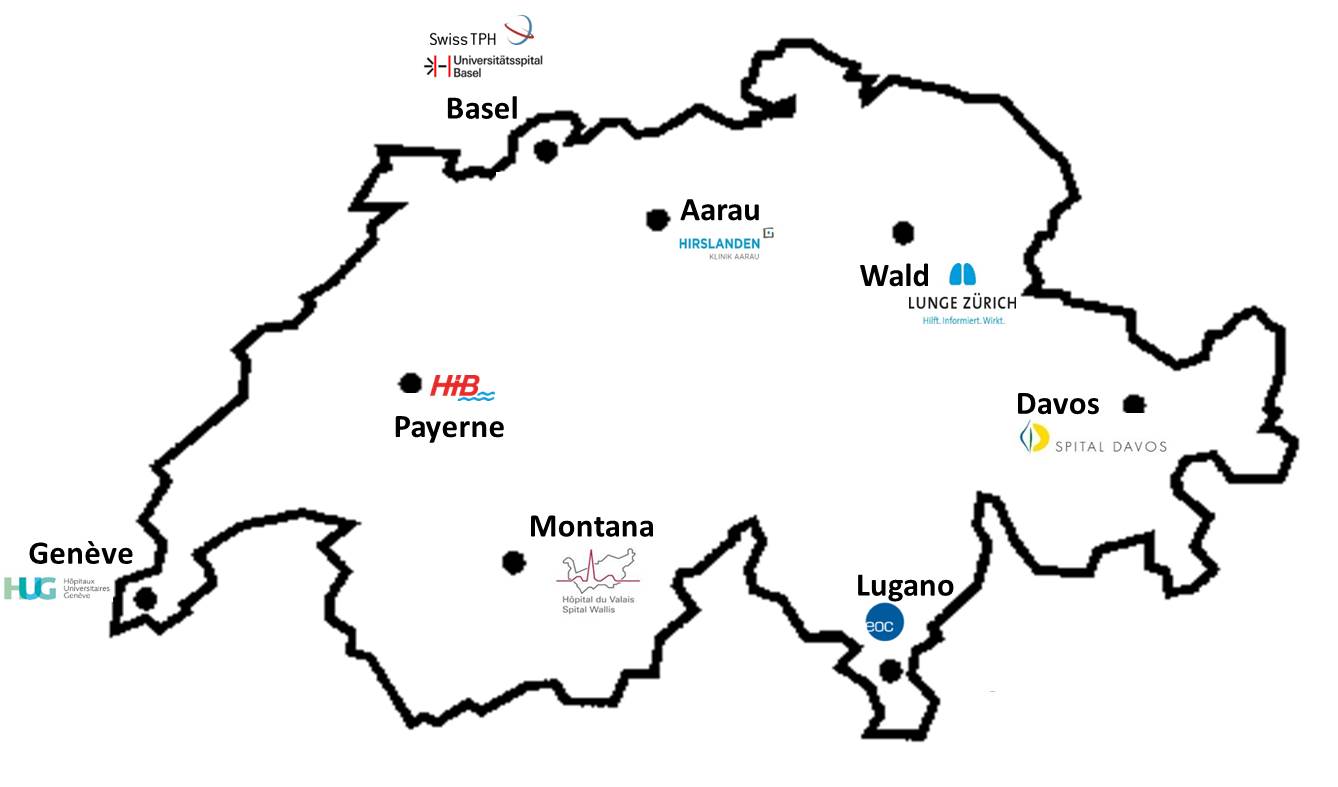
Die eingeladenen Personen waren zu Beginn zwischen 18 und 60 Jahre alt und lebten damals in acht verschiedenen Orten der Schweiz (Aarau, Basel, Davos, Genf, Lugano, Montana, Payerne und Wald). Diese Orte repräsentieren nicht nur die verschiedenen Sprachregionen der Schweiz, sondern auch die unterschiedlichen Schweizer klimatischen und sozio-demographischen Bedingungen. SAPALDIA wurde erstmals 1991 durchgeführt, um den Langzeiteinfluss der Luftverschmutzung auf die Gesundheit der Atemwege zu untersuchen. Bei SAPALDIA1 nahmen 9‘651 Personen an der Studie teil. Die gleichen Personen wurden 2002 zur zweiten Runde (SAPALDIA2) eingeladen, und 8‘047 machten wieder mit. Seitdem wurden zwei weitere Untersuchungsrunden, SAPALDIA3 (2010) und SAPALDIA4 (2017), durchgeführt. Derzeit läuft die fünfte Befragungsrunde, SAPALDIA5.


Forschungspartner
SAPALDIA ist eine multi-zentrische Studie mit acht Studienzentren:
Studienzentrum AARAU
Dr. med. Robert Bettschart
Hirslandenklinik Aarau
Studienzentrum BASEL
Prof. Daiana Stolz
Universitätsspital Basel, Pneumologie
Studienzentrum DAVOS
Dr. med Thomas Rothe
Spital Davos, Pneumologie
Studienzentrum GENF
Prof. Paola Gasche-Soccal
Hopitaux Universitaires Genève, Pneumologie
Studienzentrum LUGANO
Prof. Marco Pons
Ospedale Regionale di Lugano, Pneumologia
Studienzentrum MONTANA
Prof. Pierre-Olivier Bridevaux
Hôpital du Valais Sion, Centre Valaisan de Pneumologie
Studienzentrum PAYERNE
Dr. Luc Burdet
Hôpital Intercantonal de la Broye, Payerne
Studienzentrum WALD (ZH)
Dr. Alexander Turk
Lunge Zürich
Finanzielle Unterstützung
SAPALDIA wird aktuell durch den Schweizerische Nationalfonds (SNF) unterstützt.
Früher
Die Studie wird seit den 1990er Jahren hauptsächlich durch den Schweizerischen Nationalfonds (SNF) finanziert. Über die Jahre erhielt die Kohortenstudie zudem finanzielle Unterstützung von verschiedenen anderen nationalen und kantonalen Ämtern, darunter das Bundesamt für Umwelt, das Bundesamt für Gesundheit, das Bundesamt für Verkehr, die Kantone Aargau, Basel-Stadt, Basel-Land, Genf, Luzern, Tessin, Wallis und Zürich, sowie von der Lungenliga Schweiz und den kantonalen Lungenligen von Basel-Stadt, Basel-Land, Genf, Luzern, Tessin, Wallis, Graubünden und Zürich. Auch unterstützten die Stiftung vormals Bündner Heilstätte Arosa, die Schweizerische Unfallversicherung SUVA, die Freiwillige Akademische Gesellschaft, die UBS Wealth Foundation, die Talecris Biotherapeutics GmbH, Abbott Diagnostics, die Klinik Barmelweid, die Hirslanden Klinik Aarau, die Europäische Kommission (Grant Agreement No. 018996, GABRIEL), der Wellcome Trust (Grant Agreement No. WT 084703MA) sowie das EXPOsOMICS EC FP7 Grant (Grant Agreement No. 308610) die Studie.
Ziele von SAPALDIA
Von der „Luftverschmutzungs-Studie“ zur „Altersgesundheits-Studie“
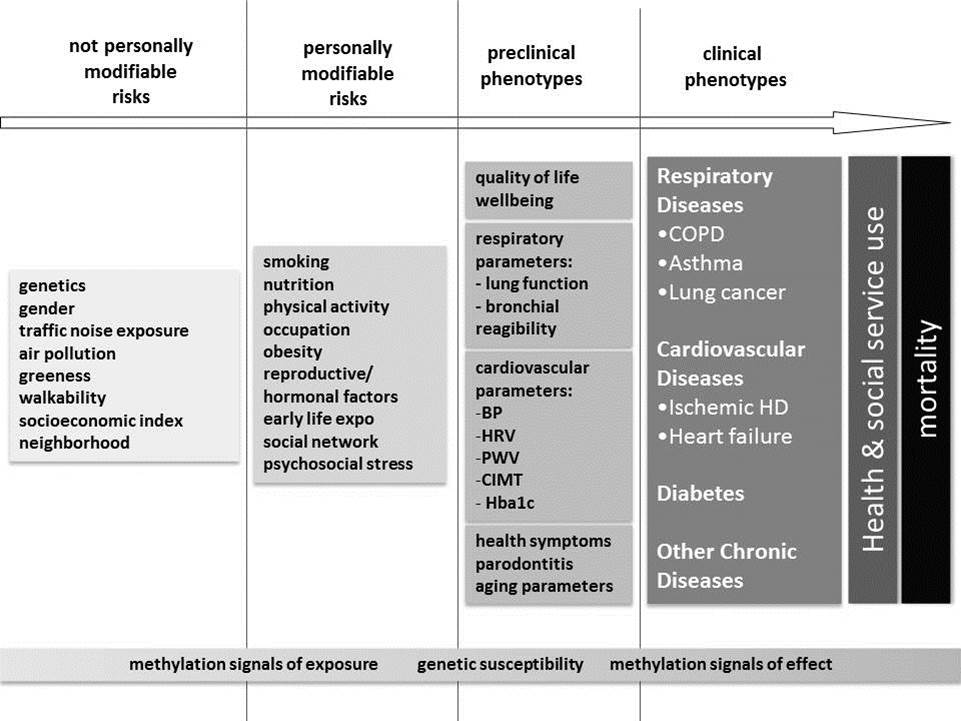
SAPALDIA hat sich von der Luftverschmutzungsstudie zu einer umfassenden Gesundheitsstudie entwickelt, welche verschiedenste Einflüsse auf chronische Krankheiten und deren Auswirkungen auf das Schweizer Gesundheitssystem untersucht. Es ist zentral, dass dafür prospektive Daten und biologische Proben von der Schweizer Bevölkerung gesammelt werden. Der Reichtum der SAPALDIA Daten kann viele verschiedene Forschungsfragen beantworten helfen und ist in breite Europäische Forschungsnetzwerke eingebunden.
Hier einige Ziele der SAPALDIA Forschung in den letzten 30 Jahren:
SAPALDIA1: Untersuchen, ob es einen Zusammenhang zwischen Luftverschmutzung und Lungenfunktion der Bevölkerung gibt. Feststellen, wie häufig Erwachsene in der Schweiz an Allergien leiden.
SAPALDIA2: Nachweisen, dass eine verbesserte Luftqualität mit einer Verlangsamung der altersbedingten Lungenfunktionsabnahme zusammenhängt.
Untersuchen, ob es einen Zusammenhang zwischen Luftverschmutzung und verschlechterter Herzfunktion gibt.
SAPALDIA3: Untersuchen, wie sich andere Faktoren, wie zum Beispiel regelmässige körperliche Bewegung, Ernährung oder Lärm, auf die Gesundheit von Erwachsenen in der Schweiz auswirken.
SAPALDIA4: Untersuchen, welche Faktoren ein gesundes Altern nachhaltig fördern, indem bisher gesammelte Daten mit neu erfassten, verfeinerten Merkmalen und Funktionen des fortschreitenden Alterns in Zusammenhang gebracht werden.
Untersuchen, welche Faktoren erklären können, wie häufig und welche Gesundheits- und Sozialdienste in Anspruch genommen werden.
SAPALDIA5: Für die aktuelle SAPALDIA Untersuchung werden zwei Fragebogenrunden im Abstand von zwei Jahren bei allen Teilnehmenden durchgeführt. Zusätzlich werden alle Teilnehmenden zu einer erneuten Gesundheitsuntersuchung mit Fokus auf Lungenfunktion eingeladen. Diese neuen Daten erlauben es langfristiger Zusammenhänge zwischen Umwelt und Gesundheit – inklusive der Auswirkungen der aktuellen Coronavirus-Pandemie – für den Schweizer Kontext zu untersuchen.
Results of SAPALDIA
21.7% der Teilnehmenden der SAPALDIA4 Gesundheitsuntersuchung haben die Schweizer Bewegungsempfehlungen erfüllt (2 ½ Stunden pro Woche in Form von Alltagsaktivitäten oder Sport mit mittlerer Intensität bewegen oder 1 ¼ Stunden Sport oder Bewegung mit hoher Intensität). Stark Übergewichtige, über 75-Jährige, Raucher und Raucherinnen, sowie Teilnehmende, die alleine leben haben mehr Zeit im Sitzen verbracht und haben weniger Zeit in leichter Bewegung und Bewegung mit mittlerer bis zu hoher Intensität verbracht als normalgewichtige, zwischen 52-64 Jahre alte, nicht rauchende und verheiratete Teilnehmende. In der französischsprachigen Schweiz lebende Teilnehmende führten im Vergleich zu Teilnehmenden aus der deutschsprachigen Schweiz seltener eine intensive körperliche Betätigung durch. Diese Ergebnisse zeigen, dass Bewegung bei älteren Personen und gezielten Untergruppen in der Schweiz gefördert werden muss (Aebi et al. 2020. Swiss Med Wkly).
Mit SAPALDIA4 Daten konnten Forschende mithilfe von Kriterien betreffend Herz-Kreislauf, Stoffwechsel und Bewegung die Teilnehmenden in drei Gruppen einteilen: 30% der Teilnehmenden wurden als «bei guter Gesundheit» eingestuft, 29% der Teilnehmenden als «bei eingeschränkter Gesundheit» und die dritte Gruppe «bei gefährdeter Gesundheit». Die Teilnehmenden, die «bei eingeschränkter Gesundheit» eingestuft wurden, haben eine niedrigere gesundheitsbezogene Lebensqualität als Teilnehmende «bei guter Gesundheit». Dies zeigte sich vor allem im Bereich der körperlichen Funktionsfähigkeit. Die Ergebnisse deuten darauf hin, dass Personen mit Herz-Kreislauf und Stoffwechsel Beschwerden, sowie Personen, die wenig körperlich aktiv sind, eine wichtige Zielgruppe für die Gesundheitsförderung und den Erhalt des Wohlbefindens darstellen (Cerletti et al. 2020, Health Qual Life Outcomes).
Zusammen mit der Europäischen Lungengesundheitsstudie, European Community Respiratory Health Survey (ECRHS), konnte gezeigt werden, dass körperliche Bewegung mit einem verringerten Risiko für die Entwicklung einer Lungenbeeinträchtigung über 10 Jahre hinweg verbunden ist. Dieses Ergebnis unterstreicht die Bedeutung der Bewegungsförderung in der Bevölkerung, um langfristig die Gesundheit zu verbessern und Erkrankungen vorzubeugen (Carsin et al. 2020. Am J Epidemiol).
Ein Ernährungsmuster, das einen hohen Anteil an Früchten, Gemüse, Nüssen und Fisch, sowie den Konsum von Suppen, Wasser, Tee und Kaffee umfasst, ist bei SAPALDIA Teilnehmenden mit einer besseren Lungenfunktion verbunden als ein Ernährungsmuster mit einem hohen Anteil an Proteinen (wie Fleisch, Wurst, Eier), salzigen Snacks und Alkohol (Steinemann et al 2018. Respiration).
Ein gesunder Lebensstil (viel Bewegung, Gewichtskontrolle, Nichtrauchen und geringer Alkoholkonsum) schützt nicht nur vor chronischen Erkrankungen, sondern wirkt sich auch positiv auf den Verlauf einer bestehenden chronischen Krankheit aus. In den SAPALDIA Daten war jedoch bei Männern trotz bekannter Bluthochdruck- oder Diabetesdiagnose keine Verbesserung des Lebensstils zu beobachten. Empfehlungen für einen gesunden Lebensstil sind eine wichtige Komponente jeder Behandlung von Diabetes und Bluthochdruck, und müssen besonders bei Männern betont werden (Walther et al. 2017. Prev Med).
SAPALDIA lieferte auch Hinweise, dass körperliche Aktivität den Effekt von Luftverschmutzung auf das kardiovaskuläre Risiko, das durch die Steifheit der Arterien bestimmt wird, in den Gebieten mit niedriger Luftverschmutzung verändern kann. Auch schon wenig körperliche Aktivität kann die negativen Auswirkungen von Luftverschmutzung auf die Gefässgesundheit vermindern (Endes et al. 2017. Int J Hyg Environ Health).
Bewegung scheint nicht gleich Bewegung zu sein, dies zeigen die SAPALDIA Daten. Bewegung in der Freizeit hat einen stärkeren Effekt auf das Körpergewicht als Bewegung bei der Arbeit. Das bedeutet, dass Sport und regelmässiges Laufen in der Freizeit gute Mittel sind, um die Gewichtszunahme in Schach zu halten (Wanner et al 2016. Prevent Med Rep).
Die Wand der Halsschlagader wird mit steigendem Alter tendenziell dicker und die Arterien werden steifer. Dieser Alterungsprozess kann auch durch regelmässigen Sport nicht ganz verhindert, aber doch verlangsamt werden (Caviezel et al. 2015. PLOSone; Endes et al. 2016. Eur J Epidemiol).
Neue Forschungsergebnisse von SAPALDIA deuten darauf hin, dass Lärmsensibilität negativ mit physischen und psychischen Aspekten der gesundheitsbezogenen Lebensqualität verbunden ist. Wie empfindlich Personen auf Lärm oder störende Geräusche reagieren, scheint relevanter für die Ergebnisse zu sein, als die Verkehrslärmbelästigung selbst. Dies deutet darauf hin, dass auch andere Lärmquellen eine Rolle für die Lebensqualität spielen könnten. Zudem scheinen Persönlichkeitsmerkmale die Auswirkung der Lärmbelästigungen auf die gesundheitsbezogene Lebensqualität zu beeinflussen. Verkehrslärmbelästigung selbst scheint die Lebensqualität vor allem in psychischen Aspekten zu beeinträchtigen (Cerletti et al., 2020. Environ Int).
SAPALDIA Forschende zeigten, dass sowohl der Verkehrslärmpegel als auch die Lärmbelästigung mit dem Risiko, eine Depression zu entwickeln, verbunden sind, insbesondere bei Personen, die sich nicht viel bewegen. Der beobachtete Zusammenhang von Lärmexposition und die damit verbundene Belästigung, sowie die stärkeren Auswirkungen von Lärmbelästigung auf Personen mit unzureichender körperlicher Aktivität oder übermäßiger Tagesmüdigkeit werfen ein Licht auf die möglichen Zusammenhänge zwischen Verkehrslärm, Lärmbelästigung und psychischen Beschwerden (Eze et al. 2020. Environ Int).
Dank Berechnungsmodellen können in der Schweiz für alle Adressen die Belastung mit Flug-, Eisenbahn- und Strassenverkehrslärm geschätzt werden. Mit den SAPALDIA-Daten konnte gezeigt werden, dass erhöhte Verkehrslärmbelastung am Wohnsitz mit einem erhöhten Risiko für Adipositas und einem grösseren Taillenumfang verbunden ist. Dies konnte für andere Lärmquellen wie Flug- oder Eisenbahnlärm so nicht nachgewiesen werden (Foraster et al., 2018. Environ. Int.).
Ergebnisse der SAPALDIA Studie deuten darauf hin, dass Lärmbelästigung auch das Auftreten von Atemwegssymptomen beeinflussen kann. Der Lärmpegel sowie die Lärmbelästigung scheinen beide, unabhängig voneinander, Asthma bei Erwachsenen zu verschlimmern. Körperliche als auch psychische Auswirkungen von Lärm können so einen Einfluss auf die Atemwege haben und scheinen darum relevant für den Umgang mit Asthma zu sein (Eze et al. 2018. Environ. Int.).
Langfristige Exposition gegenüber Eisenbahnlärm, insbesondere wiederkehrende, nächtliche Lärmbelastung, hauptsächlich im Zusammenhang mit Straßenlärm, kann die arterielle Steifigkeit, gemessen an der Halsschlagader, beeinflussen. Die Arteriensteifigkeit ist ein wichtiger Indikator für Herz-Kreislauf-Erkrankungen (Foraster et al. 2017. Environ Health Perspect).
Verkehrslärm, insbesondere Strassen- und Fluglärm, kann mit einem erhöhten Risiko, Diabetes mellitus Typ 2 zu entwickeln, in Verbindung gebracht werden. Dies konnten Forscher mit SAPALDIA-Daten zeigen (Eze et al. 2017. Int J Epidemiol). Forscher zeigten zudem, dass längerfristiger Verkehrslärm in der Nacht einen Effekt auf die Kontrolle des Blutzuckerspiegels hat, insbesondere bei Diabetikern. Das heisst, dass eine ärztliche Empfehlung an Diabetiker heissen könnte: Schliessen Sie das Fenster nachts oder schlafen Sie auf der ruhigeren Seite Ihrer Wohnung (Eze et al. 2017. Int J Environ Res Public Health).
Wer sich zuhause durch Flug-, Zug- und Strassenlärm gestört fühlt, macht weniger regelmässig Sport oder geht weniger häufig laufen. Diese Beobachtung erklärt sich wahrscheinlich dadurch, dass man weniger gut schläft (Foraster et al., 2016. Environ Int).
Eisenbahnlärm hat Auswirkungen auf den Blutdruck, insbesondere bei nächtlicher Lärmbelastung. Forschende zeigten dies in der SAPALDIA Studie. Die Effekte von Bahn- und Verkehrsbelästigung waren besonders deutlich bei Personen mit diagnostiziertem Bluthochdruck, kardiovaskulärer Erkrankung oder Diabetes (Dratva et al. 2012. Environ Health Perspect).
In einer SAPALDIA Studie konnten unsere Forschenden zeigen, dass Lärmbelästigung einen Zusammenhang mit der gesundheitsbezogenen Lebensqualität hat. Diese Ergebnisse unterstreichen die Bedeutung der Umwelt für die psychische und physische Gesundheit (Dratva et al. 2010. Qual Life Res).
Die Lungenfunktion wird durch Umwelt und Lebensstil beeinflusst. Wir konnten zeigen, dass vor allem tabakbedingte Methylierungsmuster der DNA die Lungenfunktion beeinflussen. Dies zeigt einmal mehr die Schädlichkeit des Rauchens. Die Resultate werden auch für die Beurteilung der Schädlichkeit von E-Zigaretten wichtig sein (Imboden et al. 2019. Eur Respir J).
Spielt Rauchen eine Rolle bei der Entwicklung von Asthma bei Erwachsenen? Hinweise dafür konnten Forscher im Rahmen des GABRIEL Projekts liefern. Sechs Studien haben an diesem Projekt teilgenommen, und SAPALDIA war natürlich auch dabei. Durch eine genomweite Assoziationsstudie konnten Forschende zeigen, dass es Genvarianten auf Chromosom 9 und 12 gibt, die sowohl mit Tabakrauchen als auch mit der Entwicklung von Asthma bei Erwachsenen verbunden sind (Vonk et al. 2017. Int J Hyg Environ Health).
Es braucht Jahre, bis alle Spuren, die das Rauchen hinterlassen hat, ganz verschwunden sind, und bis das EKG-Profil einer Person, die aufgehört hat zu rauchen, wieder dem EKG-Profil einer Person gleicht, die nie geraucht hat (Girard et al., 2016. Environ Res).
Im Rahmen der europäischen EXPOsOMICS Studie, bei der SAPALDIA Teil war, wurden unter anderem bei einer Gruppe von SAPALDIA Teilnehmenden aus Basel die Luftverschmutzung zuhause und im personalisierten Umfeld (bei der Arbeit, unterwegs usw.) wiederholt gemessen. Forschende fanden so heraus, dass eine kurzfristige persönliche PM2.5 und Russexposition mit Blutdruck, aber nicht mit der Lungenfunktion verbunden waren (van Nunen et al. 2021. Environ Res).
Mit SAPALDIA Daten als Teil der European Community Respiratory Health Survey (ECRHS) konnte gezeigt werden, dass Teilnehmende mit COPD und Asthma häufiger über Rauchen der Mutter berichteten und schon eine Beeinträchtigung der Lungenfunktion im Alter von 20 Jahren hatten. Bei mehr als der Hälfte begann das Asthma schon in der Kindheit. Teilnehmende mit nur COPD waren ihr Leben lang am meisten Tabakrauch und berufsbedingten Schadstoffen ausgesetzt und zeigten eine beschleunigte Abnahme der Lungenfunktion im Erwachsenenalter. Die Koexistenz von Asthma und COPD scheint ihren Ursprung früh im Leben zu haben. Präventionsmassnahmen dieser Krankheiten, die typischerweise im höheren Alter auftreten, sollten so schon in der Kindheit beginnen (Marcon et al. 2021. Eur Respir J).
In einer europaweiten Studie unter Beteiligung von SAPALDIA wurde gezeigt, dass der Sozialstatus ein wichtiger Faktor ist, der in der Analyse miteinbezogen werden muss, um den Gesundheitseffekt von Luftverschmutzung, z.B. von NO2 (Stickstoffdioxid), auf die Lungenfunktion zu bestimmen. (Keidel et al. 2019. Int J Environ Res Public Health).
Eine SAPALDIA-Studie konnte belegen, dass sich langjährige Luftschadstoffbelastung negativ auf die Herzrhythmusvariabilität auswirken kann, besonders bei Personen, denen das GSTM1-Gen fehlt. Dieser Zusammenhang war nur bei gesunden Personen erkennbar (Meier-Girard et al. 2019. Environ Int).
Es gibt mehr und mehr Hinweise darauf, dass Luftverschmutzung eine Rolle bei der Entstehung von Asthma spielt. Eine Studie unter Beteiligung von SAPALDIA konnte zeigen, dass gewisse Biomarker des Immunsystems dabei eine Rolle spielen (Mostafavi et al. 2019. Sci. Rep.).
Luftverschmutzung ist mit Hirn-/Herzgefäss-Erkrankungen assoziiert. Ergebnisse einer SAPALDIA Studie weisen auf die Rolle von oxidativem Stress und von aktivierten Entzündungsreaktionen als primären Weg hin. Die Ergebnisse dieser Studie tragen dazu bei, den Zusammenhang zwischen Luftverschmutzung und dem erhöhten Risiko für Hirn-/Herzgefäss-Erkrankungen zu entschlüsseln, indem eine Veränderung in der Methylierung der DNA zentraler Entzündungsgene über mehrere Jahre hinweg nachgewiesen werden konnte (Fiorito et al. 2018. Environ Mol Mutagen).
Arteriosklerose wurde mit der Langzeitbelastung durch Feinstaub in Verbindung gebracht. SAPALDIA konnte zeigen, dass die Dicke der Gefässwand der Karotis-Arterie mit den Feinstaubpartikeln PM10, PM 2.5 und ultrafeinen Partikeln zusammenhängt (Aguilera et al. 2016. Environ Health Perspect).
Luftverschmutzung, insbesondere Feinstaub kleiner als 10 Mikrometer (PM10), steht im Zusammenhang mit Diabetes Typ 2. In SAPALDIA konnten wir zeigen, dass Personen mit einer bestimmten Ausprägung des Interleukin 6 Gens anfälliger für das Risiko von Feinstaub sind, Diabetes Typ 2 zu entwickeln. Interleukin 6 ist an Entzündungsprozessen beteiligt und zeigt so die Relevanz von Entzündungsprozessen in der Beziehung von Diabetes Typ 2 und Luftverschmutzung durch Feinstaub (Eze et al. 2016. Environ Health). Eine Folgestudie konnte daraufhin Hinweise liefern, dass der Effekt von Luftschadstoffen auf das Diabetes-Risiko durch Veränderung der Insulinsensitivität bei Menschen mit einer bestehenden Entzündung zurückgeführt werden konnte (Eze, et al. 2016. Environ Int).
Erhöhter Blutdruck, Übergewicht und, vor allem, Fett am Bauch, sowie erhöhte Blutzucker- und Blutfettwerte werden von den Ärzten „Metabolisches Syndrom“ genannt. In SAPALDIA konnten wir zeigen, dass die Belastung durch Feinstaub auch das Risiko für das metabolische Syndrom erhöht (Eze et al. 2015. PLOS One).
Wohnen in Gebieten mit starker Verkehrsbelastung ist mit erhöhten Blutwerten für das C-reaktive Protein verbunden. Dieser Blutwert ist ein Entzündungsmarker im Körper, sowie ein bekannter Risikofaktor für Herz-Kreislauf-Erkrankungen. Es bleibt jedoch unklar, welcher Luftschadstoff für diesen Zusammenhang verantwortlich ist (Lanki et al. 2015. Environ Health Perspect).
SAPALDIA ist Teil des Europäischen multizentrischen ESCAPE Projektes (European Study of Cohorts for Air Pollution Effects). Im Rahmen der ESCAPE Studie wurde der Zusammenhang zwischen der Sterblichkeit an natürlichen Ursachen und der Langzeitbelastung durch verschiedene Luftschadstoffe untersucht. Die Studie konnte zeigen, dass es eine Langzeitbelastung durch Feinstaub mit der natürlichen Sterblichkeit korreliert. Dies wurde auch bei tiefen Feinstaubkonzentrationen, die weit unter dem derzeitigen europäischen Jahresmittelgrenzwert liegen, gezeigt (Beelen et al. 2014. Lancet). Auch die Langzeitbelastung durch Feinstaub kleiner als 2,5 Mikrometer (PM₂,₅), insbesondere Schwefel, wurde mit einer erhöhten natürlichen Sterblichkeit in Verbindung gebracht (Beelen et al. 2015. Environ Health Perspect).
In einer der grössten europäischen Forschungszusammenarbeit (ESCAPE) zum Thema Luftverschmutzung und Gesundheit konnte nachgewiesen werden, dass Luftverschmutzung, auch wenn sie sehr niedrig ist, die durchschnittliche Lungenfunktion der Bevölkerung verschlechtert. Interessanterweise reagiert die Lunge von stark übergewichtigen Personen stärker auf die Luftverschmutzung (Adam et al. 2015. Eur. Resp. J.).
In der Schweiz verursacht die Luftschadstoffbelastung durch den Verkehr 2010 schätzungsweise 14 000 verlorene Lebensjahre, zudem wurden 8700 kardiorespiratorische Tage mit Spitalaufenthalt auf verkehrsbedingte Luftverschmutzung zurückgeführt. Schadstoffbelastung in der Luft sowie Lärm verursachten 2010 Kosten in der Grössenordnung von 1.700 bis 1.800 Mio. CHF. Bei der Luftverschmutzung sind die Auswirkungen auf die Sterblichkeit die wichtigsten Kostenfaktoren (Vienneau et al. 2015. Int J Hyg Environ Health).
Jede 20. Person, die 2010 bei SAPALDIA3 mitgemacht hat, hat Diabetes mellitus Typ 2. Und: Je höher die Feinstaubbelastung am Wohnort, desto grösser das Risiko für Diabetes Typ 2. (Eze et al. 2014. Environ Int).
Im Rahmen des Europäischen ESCAPE Projekts wurden mithilfe von 15 Kohorten, unter anderem SAPALDIA, der Einfluss von Luftverschmutzung auf den Blutdruck untersucht. Es wurde herausgefunden, dass bei Teilnehmenden, die keine blutdrucksenkenden Medikamente einnehmen und die an ihrem Wohnort eine hohe, verkehrsbedingte Luftschadstoffbelastung haben, häufiger erhöhter arterieller Blutdruck gemessen wird. Somit scheint auch das Risiko für Bluthochdruck gegeben. Der Zusammenhang von einzelnen Luftschadstoffen mit Blutdruck war allerdings nicht eindeutig (Fuks et al. 2014. Environ Health Perspect).
Genetische Variationen in einem der wichtigsten entzündungsfördernden Zytokine, Interleukin 6, können die Herzfrequenzvariabilität verändern, und dies steht im Zusammenhang mit der Langzeitbelastung durch verkehrsbedingten Feinstaub (Adam, et al. 2014. PLoS One).
In SAPALDIA wurden Hinweise gefunden, dass sich die Langzeitbelastung durch Stickstoffdioxid (NO2) negativ auf die autonome Funktion des Herzens von älteren Frauen und Frauen im mittleren Alter auswirken könnte (Felber, Dietrich, et al. 2008. Environ Health Perspect).
Lesen Sie dazu auch den Artikel „Lufthygiene als Erfolgsfaktor”, der im April 2022 im VSAO Journal erschienen ist.
Es gibt immer mehr Hinweise darauf, dass Geschlechtshormone eine Rolle in der Lungengesundheit spielen. Dehydroepiandrosteron-Sulfat (DHEA-S) ist eine Vorstufe von weiblichen sowie männlichen Geschlechtshormonen und wurde im Blut gemessen. Forschende zeigten, dass bei Frauen eine niedrige Menge Dehydroepiandrosteron-Sulfat (DHEA-S) im Blut mit einer beeinträchtigten Lungenfunktion und einem grösseren Risiko für die Entwicklung einer Atemwegseinschränkung im späteren Erwachsenenalter verbunden ist. Diese Ergebnisse deuten auf eine Rolle von Geschlechtshormonen, in diesem Fall DHEA-S, für die Atemwegsgesundheit hin (Pesce et al., 2020, EClinicalMedicine).
Eine mässige sowie eine hohe Gewichtszunahme über 20 Jahre ist mit einer beschleunigten Abnahme der Lungenfunktion verbunden. Eine Gewichtsabnahme hingegen wirkt dem entgegen. Gewichtskontrolle ist somit wichtiger Faktor für den Erhalt einer guten Lungenfunktion im Erwachsenenalter (Peralta et al. 2020. Thorax).
Eine Abschätzung, wie sich die Anzahl an COPD-Erkrankten entwickeln wird, ist wichtig, um die zukünftige Krankheitslast zu bestimmen. Mithilfe der Langzeitstudien ECRHS und SAPALDIA konnte gezeigt werden, dass die Inzidenz (Anzahl der neu auftretenden Erkrankungen) von Atemwegsobstruktion (auch Atemwegsverengung) über 20 Jahre bei Erwachsenen ohne Asthma, die im Alter von 25 bis 64 Jahren untersucht wurden, beträchtlich war. Der altersbedingte Anstieg der Anzahl an Atemwegsobstruktion bei Teilnehmenden, die nie geraucht haben, hing stark mit der aufsummierten Aussetzung gegenüber Tabak zusammen, was die unterschiedlichen Alterstrends bei Männern und Frauen weitgehend zu erklären scheint. Obwohl die Zunahme der Atemwegsobstruktionsfälle mit dem Alter relativ unverändert war, war sie auch bei den Lebenszeit-Nichtrauchern hoch, was die Tatsache unterstützt, dass die COPD auch in der nicht aktiv rauchenden Bevölkerung eine erhebliche Belastung darstellt (Accordini et al. 2020. Sci Rep).
Im Rahmen des europäischen Projekts ECRHS, bei dem SAPALDIA schon seit Anfang an dabei ist, wurde untersucht, ob eingeführte Rauchverbote die Exposition mit Passivrauch verringert haben. Die Studie konnte zeigen, dass sich nach Einführung von Rauchverboten die Wahrscheinlichkeit, auf der Arbeit Passivrauch ausgesetzt zu sein, merklich verringert hat. Rauchverbote in öffentlichen und privaten Arbeitsplätzen haben also effektiv das schädliche Passivrauchen verringert (Olivieri et al. 2019. Indoor Air).
In SAPALDIA haben 4 % der Teilnehmerinnen und Teilnehmer eine eingeschränkte Lungenfunktion. Die Gründe dafür können vielfältig sein. In den SAPALDIA Daten lässt sich aber erkennen, dass sich Personen mit eingeschränkter Lungenfunktion körperlich weniger häufig und weniger intensiv betätigen und dass sie auch häufiger an anderen Krankheiten wie Bluthochdruck, Diabetes, Herz-Kreislauf-Erkrankungen und Depressionen leiden (Carsin et al. 2019. Respir Med).
Eine SAPALDIA-Studie konnte zeigen, dass das Risiko, im späten Erwachsenenalter an Asthma zu erkranken, zunimmt, wenn Teilnehmende zwischen verschiedenen Lebenszeitpunkten (Kindheit, Pubertät, junges Erwachsenenalter usw.) eine Zunahme der Körpersilhouette (Gewichtszunahme) berichteten. Bei Frauen war das insbesondere zwischen 45 und der Menopause der Fall (Hansen et al. 2019. Respiratory Medicine).
Epidemiologische Studien zeigen, dass Luftverschmutzung ein gemeinsamer Risikofaktor für Lungen- und Hirn-/Herzgefäss-Erkrankungen ist. Im Rahmen des europäischen EXPOsOMICS Projekts, bei dem SAPALDIA mitmacht, zeigten Forschende, dass gewisse Stoffwechselvorgänge im Körper (z.B. der Linoleatstoffwechsel) durch eine langjährige Luftverschmutzung, besonders durch Feinstaub, gestört werden. Sie konnten auch zeigen, dass der Linoleatstoffwechsel auch in Asthma bei Erwachsenen und in Hirn-/Herzgefäss-Erkrankungen eine Rolle spielt. Diese Resultate deuten darauf hin, dass Luftverschmutzung Stoffwechselvorgänge, die häufigen chronischen Erkrankungen gemeinsam sind, stören und damit das Risiko für Krankheiten wie Asthma und Hirn-/Herzgefäss-Erkrankungen erhöhen kann (Jeong et al. 2018. Environ Int). (Linoleat ist ein Salz der ungesättigten Fettsäure Linolsäure).
Lungenerkrankungen sind bei Erwachsenen mit einem erhöhten Risiko für Herz-Kreislauf-Erkrankungen verbunden, doch man weiss wenig über frühe Auswirkungen in der Jugend. In der SAPALDIA Jugendstudie wurden während SAPALDIA3 257 Kinder von SAPALDIA Teilnehmer*innen untersucht. Es wurde gezeigt, dass bei asthmatischen Jungen schon in der Jugend ein erhöhtes Risiko für frühe Blutgefässveränderungen im Herz-Kreislauf-System besteht. Diese Resultate deuten darauf hin, dass Asthma in der Kindheit das Risiko für Herz-Kreislauf-Krankheiten im späteren Erwachsenenalter erhöhen könnte (Dratva et al. 2018. Eur J Pediatr).
Asthma ist eine komplexe Lungenkrankheit. Möglicherweise ist es gar nicht eine Krankheit, sondern eine Gruppe von unterschiedlichen Krankheiten, die aber alle zu Asthmaattacken führen können. Basierend auf den Angaben, wie häufig die Asthmaattacken sind, ob Asthma zusammen mit Allergien auftritt, ob Asthma-Medikamente eingenommen werden oder in welchem Alter Asthma diagnostiziert wurde, konnten wir in den SAPALDIA Daten verschiedene Asthma-Typen identifizieren. Es wird vermutet, dass starkes Übergewicht ein Risikofaktor für Asthma ist. Tatsächlich gab es Unterschiede, ob und inwieweit Übergewicht die verschiedenen Asthma-Typen beeinflusst. (Jeong et al. 2017. Respir Med.).
Asthma und allergische Symptome werden im Alter seltener, aber treten doch noch häufig auf. Personen, die selbst Asthma haben oder bei denen in der Familie Allergien vorkommen, haben ein erhöhtes Risiko, an einer allergischen Form des Schnupfens zu leiden. Wer auf dem Bauernhof aufwuchs, ältere Geschwister hat oder derzeit auf dem Land lebt, hat weniger allergischen Schnupfen (Abramson et al. 2016. Allergol Int).
Das Lungenprotein CC16 wird in der Lunge produziert und ist im Blut messbar. Je mehr CC16 von der Lunge produziert wird, desto besser können die entzündlichen und oxidativen Angriffe von Umwelteinflüssen von der Lunge bekämpft werden. Dieser schützende Effekt von CC16 konnte auch in den Blutproben der SAPALDIA Teilnehmer gezeigt werden. Je höher der CC16 Wert im Blut, desto stabiler blieb die Lungenfunktion über die Jahre. Dieses Resultat ist ein Wegweiser für mögliche neue Medikamente gegen Lungenkrankheiten (Guerra et al. 2015. Lancet Resp Med).
Ebenfalls im Rahmen von ECRHS konnten Forschende zeigen, dass eine Aussetzung gegenüber Schadstoffen im Beruf, beispielsweise Staub, Mineralstaub und Metallen, ein Risikofaktor für eine Verschlechterung der Lungenfunktion ist. Die Berufstätigkeit scheint ein Risikofaktor unabhängig vom Rauchen zu sein und unterstreicht so die Notwendigkeit, diese Schadstoffaussetzungen am Arbeitsplatz zu verhindern und besser zu kontrollieren (Lytras et al. 2021. Ann Am Thorac Soc).
Wer am Arbeitsplatz Metallen oder Mineralstaub ausgesetzt ist, leidet häufiger an chronischer Bronchitis und hat häufiger Probleme mit Auswurf. Dies sind Resultate einer Analyse im Rahmen des ECRHS Projekts (Lytras et al. 2019. Occup. Environ. Med.).
Beim Putzen mit chemischen Reinigungsmitteln (z. B. Reinigungssprays) sind die Atemwege den chemischen Dämpfen der Mittel ausgesetzt. Forscher von ECRHS haben gezeigt, dass bei Frauen, die regelmässig zuhause putzen oder als Reinigungskraft arbeiten, die Lungenfunktion schneller abnimmt. Dies bedeutet, dass der längerfristige Gebrauch von chemischen Reinigungsmitteln beim Putzen ein langfristiges Gesundheitsrisiko für die Atemwege darstellen könnte (Svanes et al., 2018. Am J Respir Crit Care Med.).
Biologische Abläufe im Körper werden durch Umwelt und Lebensstil beeinflusst. Das geschieht durch Epigenetik, denn epigenetische Veränderungen der DNA, Methylierungsmuster, regulieren biologische Abläufe. Epigenetische Muster, die mit Luftverschmutzung und Verkehrslärm zusammenhängen, könnten teilweise zu physiologischen und biochemischen Veränderungen im Körper führen. In SAPALDIA konnte gezeigt werden, dass DNA-Methylierungen spezifisch mit Verkehrslärm und Aussetzung gegenüber Luftverschmutzung zusammenhängen. Besonders stark von den Veränderungen waren die Bereiche Entzündungsreaktionen, Zellentwicklung und Immunreaktionen betroffen (Eze et al., 2020. Environ Health Perspect).
Änderungen in der DNA-Methylierung können Aufschluss über das Alter geben, unabhängig vom Lebensalter eines Menschen. Es kann einen Unterschied zwischen dem abgeschätzten Alter einer Person, basierend auf der DNA Methylierung, und dem tatsächlichen Lebensalter geben. Wenn das abgeschätzte Alter höher ist als das Lebensalter, dann wird dies auch epigenetische Altersbeschleunigung genannt. Dieser Unterschied wird benutzt, um das Altern genauer zu erforschen. In SAPALDIA und ECRHS konnte gezeigt werden, dass die Altersbeschleunigung, basierend auf den epigenetischen Mustern, deutlich mit der Lungenfunktion von Frauen, die älter als 50 Jahre alt sind, zusammenhängt. Es wird vermutet, dass dies aufgrund der Menopause sein könnte. So könnte man dies nutzen, um die Lungengesundheit von älteren Frauen genauer zu bestimmen, und es könnte allgemein ein wichtiger Faktor zur Bestimmung der Lungengesundheit in Erwachsenen sein (Rezwan et al., 2020. Aging).
Lungenfunktion ist vererbbar und unterscheidet sich zwischen den Geschlechtern, während der gesamten Lebensdauer. Es ist allerdings wenig über geschlechtsspezifische genetische Effekte auf die Lungenfunktion bekannt. Forschende haben herausgefunden, dass genetische Varianten, die mit der HHIP (Hedgehog-Interacting Protein) in Verbindung stehen, geschlechtsspezifische Auswirkungen auf die Lungenfunktion haben (Fawcett et al. 2020. Wellcome Open Res).
In einer epigenetischen Analyse fanden Forschende heraus, dass der BMI (Body Mass Index) mittels DNA Methylierungen wahrscheinlich keinen Einfluss auf die Lungenfunktion hat (Amaral et al. 2020. BMC Pulm Med).
In einem Zusammenschluss von vielen Studien unter Beteiligung von SAPALDIA konnte gezeigt werden, dass man anhand von epigenetischen Mustern die biologischen Vorgänge identifizieren kann, durch die sich soziale Ungleichheiten auf ein gesundes Altern auswirken können (Fiorito et al. 2019. Aging).
Übergewicht ist wiederholt mit nicht-allergischem Asthma in Verbindung gebracht worden. In Maus-Modellen gab es Hinweise, dass Entzündungsmechanismen eine massgebliche Rolle spielen. Mithilfe von SAPALDIA-Daten wurde untersucht, welche biologischen Mechanismen dahinterstecken könnten. SAPALDIA Forschende konnten bestätigen, dass das mit Übergewicht verbundene erhöhte Risiko für nicht-allergisches Asthma durch epigenetische Veränderungen in entzündungsfördernden Genen mitbeeinflusst wird (Jeong et al. 2019. Int J Environ Res Public Health).
In grossen internationalen Studien, bei denen Daten von mehr als 400'000 Teilnehmenden mit einbezogen wurden, konnte man über 270 genetische Risikofaktoren für die Lungenfunktion identifizieren. Die Kenntnis von genetischen Faktoren kann langfristig die Behandlung von COPD (chronisch obstruktive Lungenerkrankung) verbessern, weil die Krankheitsmechanismen besser verstanden werden. So kann sogar auch zur Prävention dieser schweren Erkrankung beigetragen werden (Shirane et al. 2019. Nature Genetics; Wain et al. 2018. Nature Genetics; Jackson et al. 2018. Wellcome Open Research).
Asthma ist eine chronische, behandelbare Lungenkrankheit. Es kommt vor, dass Asthma auch wieder verschwinden kann (Remission). In einer Zusammenarbeit mit anderen Kohortenstudien wurden Gene identifiziert, die wahrscheinlich bei der Remission von Asthma eine Rolle spielen (Vonk et al., 2018. Clin. Exp. Allergy).
Allergischer Heuschnupfen kommt in gewissen Familien häufiger vor als in anderen, und in einer grossen internationalen Studie mit fast 60'000 Personen mit Heuschnupfen, zu der auch SAPALDIA Analysen beigesteuert hat, wurden 20 neue Gene identifiziert, die das Risiko erhöhen, Heuschnupfen zu bekommen (Waage et al. 2018, Nature Genetics).
Das Protein Alpha1-Alpha-Trypsin (AAT) zirkuliert im Blut und schützt die Lunge vor Angriffen, die durch Rauchen verstärkt werden. Es ist bekannt, dass bei einem genetisch bedingten Mangel an AAT Protein im Blut und bei gleichzeitigem Rauchen eine chronische Lungenerkrankung bereits im mittleren Erwachsenenalter auftreten kann. SAPALDIA-Forschende konnten kürzlich nun zeigen, dass AAT nicht nur die Lunge, sondern auch die Blutgefässe schützen kann. Ob es klinisch relevant ist, diesen traditionellen Lungenrisikofaktor auch für Herz-Kreislauf-Erkrankungen zu beachten, muss zuerst mit weiteren Studien belegt werden (Curjuric et al. 2018. Arteriosclerosis). Weiterhin konnten wir mit SAPALDIA-Daten epigenetische Muster (Analyse der DNA-Methylierung) analysieren und zeigen, dass die epigenetische Regulierung der Genregion von AAT wider Erwarten nicht die Lungenfunktion in der allgemeinen Bevölkerung beeinflusst (Beckmeyer-Borowko et al., 2018, Resp. Res.).
Die Analyse der SAPALDIA Daten zu Genen, Luftverschmutzung und Lungenfunktion erlaubte die Identifikation des Cadherin13 Gens. Je nach Genvariante von Cadherin13 reagiert die Lunge stärker oder schwächer auf Feinstaub. Wahrscheinlich verstärkt Cadherin13 den Luftschadstoffeffekt auf die Lungen, indem es Adiponectin – ein entzündungsregulierender Botenstoff – weniger verfügbar macht. Adiponectin ist auch im Zusammenhang mit Gewichtsreduktion von Bedeutung (Imboden et al. 2015. Environ Health Perspect).
Die Zahngesundheit der Schweizer Bevölkerung wurde im Rahmen der SAPALDIA4-Gesundheitsuntersuchung untersucht. So wurden zum ersten Mal schweizweit Untersuchungen gemacht, um Daten zur Zahngesundheit in der Bevölkerung zu erheben. Es wurde gezeigt, dass den Teilnehmenden durchschnittlich fünf Zähne fehlten, 74.8% hatten Zahnprothesen und bei 21.1% wurde eine Taschentiefe von mehr als 4 mm festgestellt, was ein Hinweis für Parodontitis ist. Die durchschnittliche Anzahl der fehlenden Zähne und das Vorhandensein von Zahnverlust, festsitzendem Zahnersatz und herausnehmbarem Zahnersatz hängen mit Alter, Bildungsgrad, Raucherstatus und der Zeit seit dem letzten Zahnarztbesuch zusammen (Schmidt JC et al. 2020. Eur J Oral Sci).