
Urban Public Health
As the world becomes increasingly urbanised, addressing health needs and health inequities in urban and peri-urban populations is vital. Urban Public Health (UPH) is a multidisciplinary field aiming to create healthier, more sustainable and equitable urban environments. The primary focus our group is to conduct inter- and transdisciplinary research aimed at promoting sustainable development in urban contexts, both in Switzerland and internationally. We also conduct research in rural areas, as those are deeply connected to cities by providing essential resources such as agricultural produce and natural resources.
Independent of the context, we approach health holistically, integrating aspects such as social and environmental determinants of health, population mobility, relational well-being, mental health, non-communicable diseases and infectious diseases.
Solution- and impact-oriented research
Our group conducts translational and engaged research specifically focused on the health challenges and opportunities associated with urban and peri-urban environments. Several of our ongoing international projects aim to integrate public health into urban planning, civil engineering and architectural design by, for example, using Health Impact Assessment (HIA) as a central approach. In a more local context, we are part of a new initiative in the city of Basel that will assess the specific needs and preferred mental health treatments for people with refugee status. Another key interest of our group is to investigate the health co-benefits of promoting sustainable cities and communities through mixed-methods intervention studies, big data analysis and modelling.
Whenever possible, we aim to promote collaboration between public health professionals, epidemiologists, clinicians, urban planners, architects, engineers, policy-makers and, last but not least, community members throughout the project implementation cycle. Overall, our research group is part of the evolving discipline of Sustainability Science, seeking to provide data, stakeholder perspectives and evidence-based support for projects and policies, thereby contributing to positive social change.


Selected projects

Young people's urban health
The Young Gamechangers Initiative aims to improve young people’s urban health and well-being through digital engagement in urban governance and inclusive public space design. Implemented in three pilot cities, the project brings together UN-Habitat and WHO. Swiss TPH supports WHO in developing tools that help young people assess how public spaces affect their health. → Read more
Climate change and maternal and child health in Mozambique
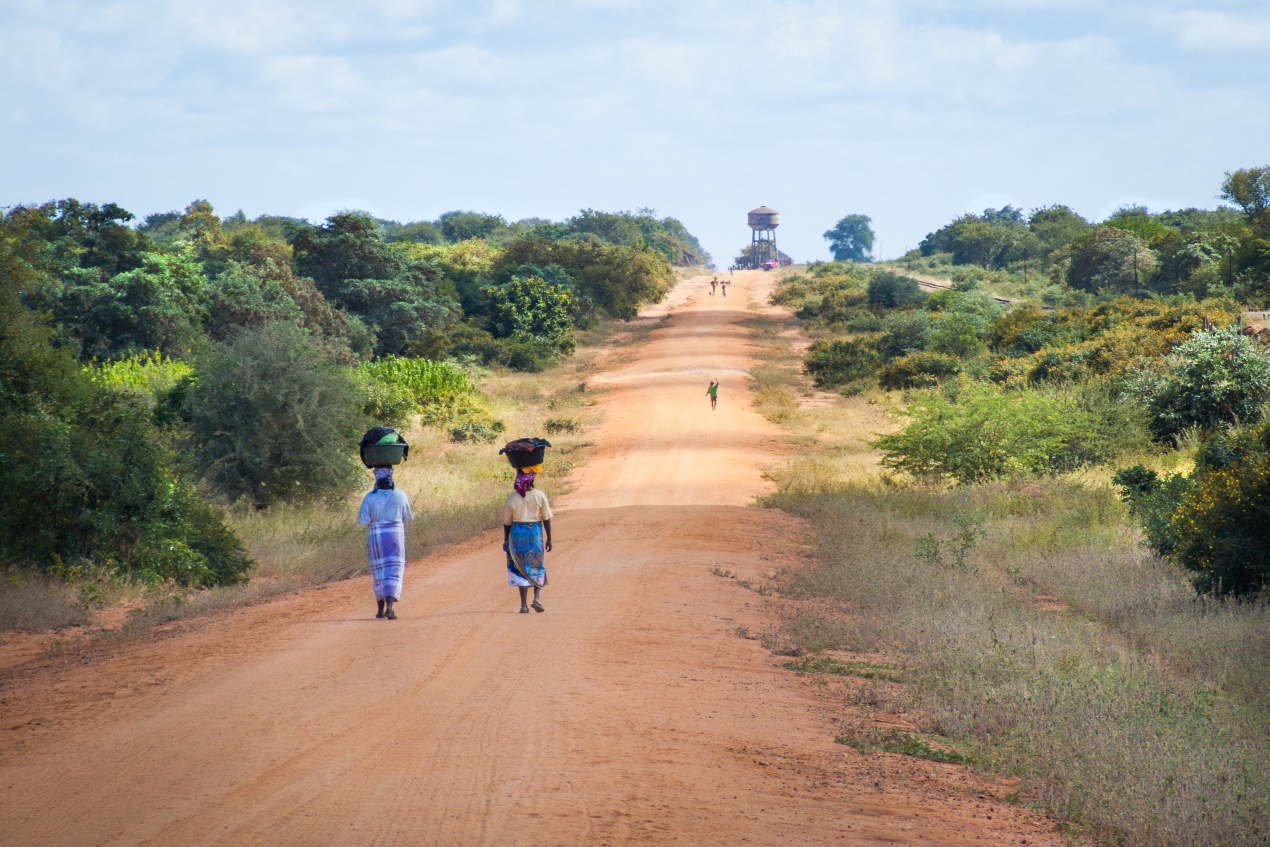
The CliMaH project combines satellite and climate data with field research to understand how climate change, urbanisation and shifting agriculture affect maternal and child health in Mozambique. Together with a global consortium, Swiss TPH is developing a framework for assessing the health impacts of climate change that can be adapted to other settings. → Read more

Gender, sex, physical activity and air pollution
The INCLUDE study examines how sex and gender shape older adults’ responses to physical activity in polluted air, in people with and without asthma or COPD. During outdoor walks and daily life, participants wear sensors tracking breathing, activity and personal pollution exposure. The findings will inform healthier urban environments for ageing populations. → Read more

Barriers to mental health care for socially vulnerable displaced people with depression
This study examines mental health needs and barriers to care among refugees and asylum seekers in Basel-Stadt, Switzerland. Using a three-year longitudinal mixed-methods approach, researchers will collect quantitative surveys (n=300) and qualitative interviews to assess needs and trends. The findings aim to inform interventions to improve access to care and guide national efforts, while also supporting social integration and serving as a model for similar initiatives across Switzerland.

Suicidality in Zambia
Suicide is a leading cause of death among young people, and three-quarters of suicides occur in low- and middle-income countries, where data are often lacking. Swiss TPH examined suicidal ideation and behaviour among youth in Lusaka, Zambia, using mixed methods to develop low-barrier, evidence-based interventions for suicide prevention.

Planetary Health in health education
PHUSE is a national initiative to embed Planetary Health in health education across Switzerland, through a shared core curriculum, teaching materials and a network of institutions. Swiss TPH studies how Choosing Wisely guidelines and Planetary Health measures can be promoted in teaching hospitals and turns the insights into practical lessons for students. → Read more
 Micha Bigler
 Lenita Edward
 Irene Falgas Bague
 Céline Fürer
 Vitor Pessoa Colombo
 Mirko Winkler
 Astrid Knoblauch
 Sarah Rajkumar
 Anna Duchenko
 Til Hänggi