Noma
Noma is a gangrenous disease manifesting itself first as gingivitis and then rapidly progressing to destroy the soft and hard facial tissues. It predominantly affects children aged 2-6 years living in extreme poverty but can also affect adults with immune-suppression. Noma has a mortality rate of up to 90 per cent and leaves survivors with significant disabilities and disfigurement, often causing stigmatisation and discrimination. Major known risk factors of noma are living in extreme poverty, severe chronic and acute malnutrition, suffering from concomitant infections and poor oral hygiene. So far, no single organism has been identified as the causative agent of noma, but various bacteria have been identified in wounds caused by the disease.
Noma develops over five stages, starting with an oral microbiome imbalance triggered by associated risk factors. In stage 1, the patient suffers from necrotizing gingivitis (formerly known as acute necrotizing gingivitis), stage 2 progresses to a facial oedema, which within two weeks of onset, starts necrotizing and destroying facial tissue and bone structures (gangrenous stage 3). Survivors progress to a scarring stage 4 and the sequelae stage 5. Noma is fully reversible if treated with a combination of broad-spectrum antibiotics up to the oedema stage.
The combination of occurrence in neglected populations often lacking access to medical care, rapid disease progression, lack of awareness among affected populations and health staff, and stigmatization of patients result in noma cases often remaining unrecorded, actively hidden or receiving delayed treatment. Therefore, accurate estimates of the global incidence and prevalence of affected individuals are lacking, and the burden of disease remains unknown. Widely accepted estimates suggest several ten thousand incident cases per year in over 23 countries.
Swiss TPH’s role in noma research
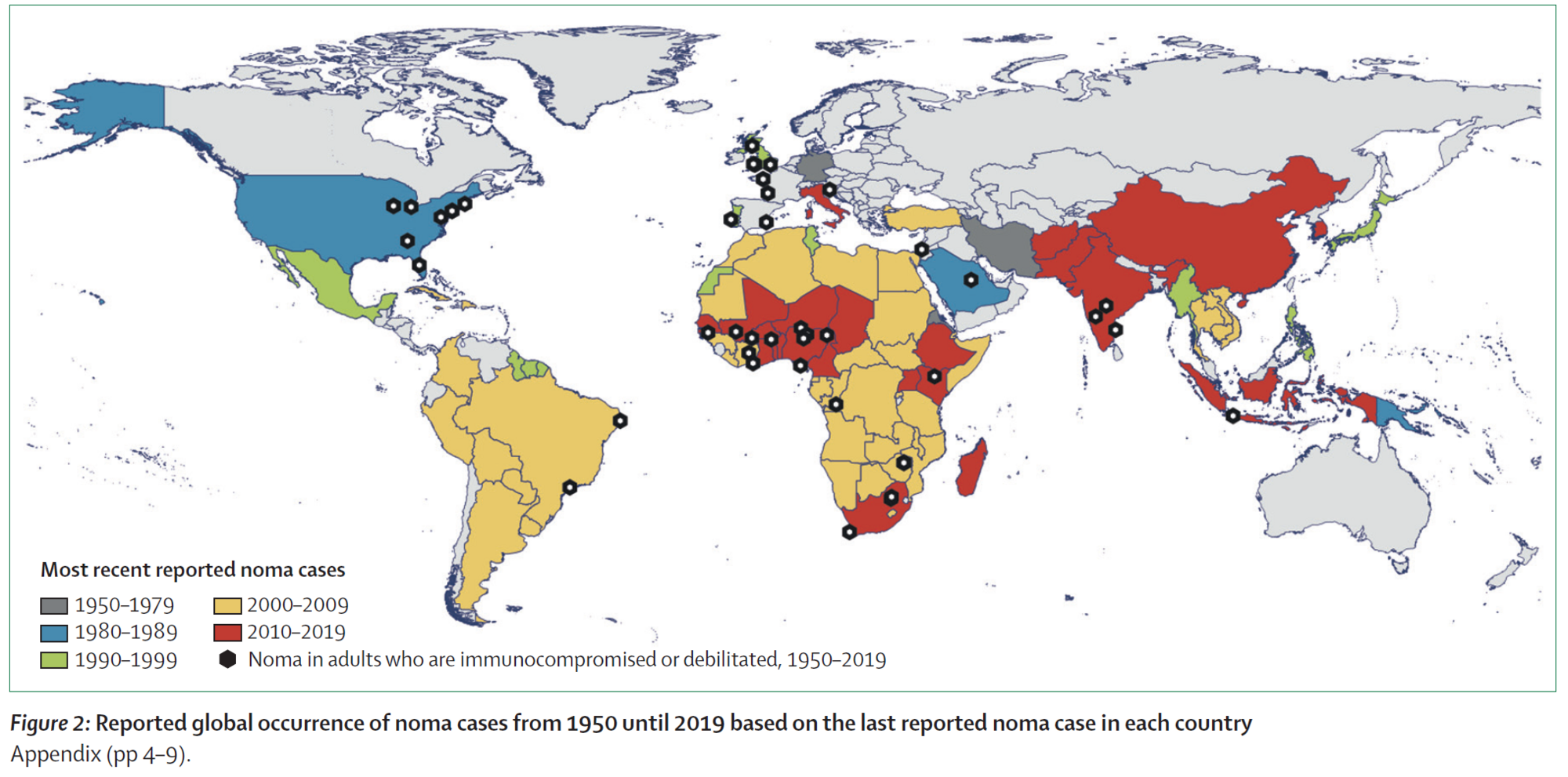
Since 2020, Swiss TPH has been actively involved in shaping noma research. As part of the Noma Project, we performed the first systematic literature review on the global distribution, prevalence and incidence of noma that updated a more than 20-year-old map on noma’s occurrence. This information supported the request led by Nigeria and followed by 33 countries to include noma as a neglected tropical disease.
In 2024, Swiss TPH co-organised a noma symposium with the noma survivor’s association Elysium to define the noma research agenda. Participants included noma survivors, representatives from non-governmental organisations, academia, medical practitioners, global health alliances, global health donors and the WHO.
Swiss TPH then created the Noma Platform, which is hosted by the Diseases and Programmes unit and funded by the Thomas & Doris Ammann Foundation. The overarching objective of the Noma Platform is to promote noma prevention, early detection and treatment through implementation research and the provision of a platform for stakeholder engagement and raising awareness, with active participation of persons affected by noma.
Applied research is currently pursued to (i) predict areas at risk of noma, and (ii) explore evidence-based antibiotics regimens for the treatment of early noma stages. By co-organizing platform activities with noma survivors, the noma platform aims to set an example of conducting research informed by the views and needs of persons affected.
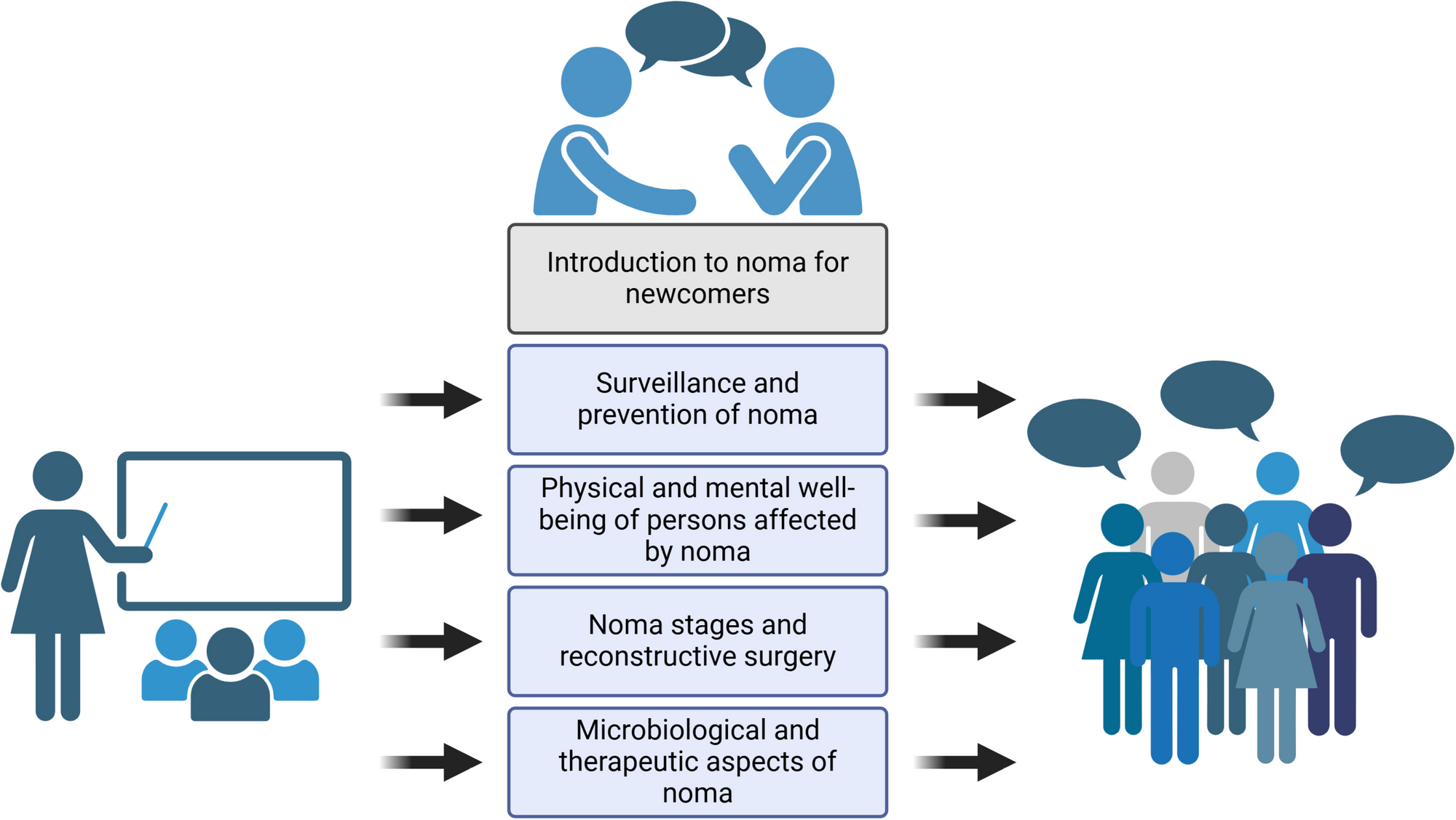
The platform function’s main purpose is to stimulate cross-sectoral noma research and awareness raising through connecting stakeholders, including survivors, whose activities are focused on noma. Related fields are actively encouraged to engage in the spirit of integration and cross-learning. By uniting noma stakeholders through events and communication as well as the pursuit of research, the platform aims to foster partnerships, promote evidence generation and contribute to increased noma prevention, early detection, effective treatment and accompaniment of survivors. The platform also facilitates the provision of expertise through mandates, training and teaching activities.